
The Hot stove is a speculative design project made with FabLab Barcelona, Advanced Architecture Barcelona and a group of independent designers and engineers to investigate the social and poetic role of everyday machines and their design imperatives.
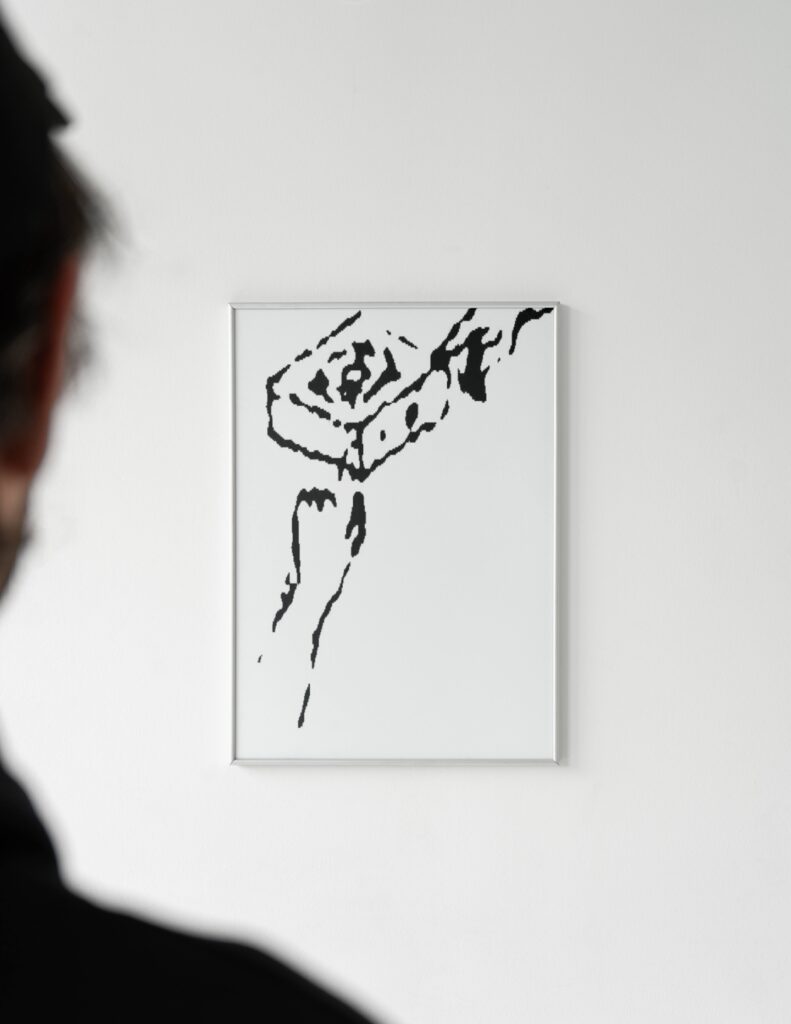
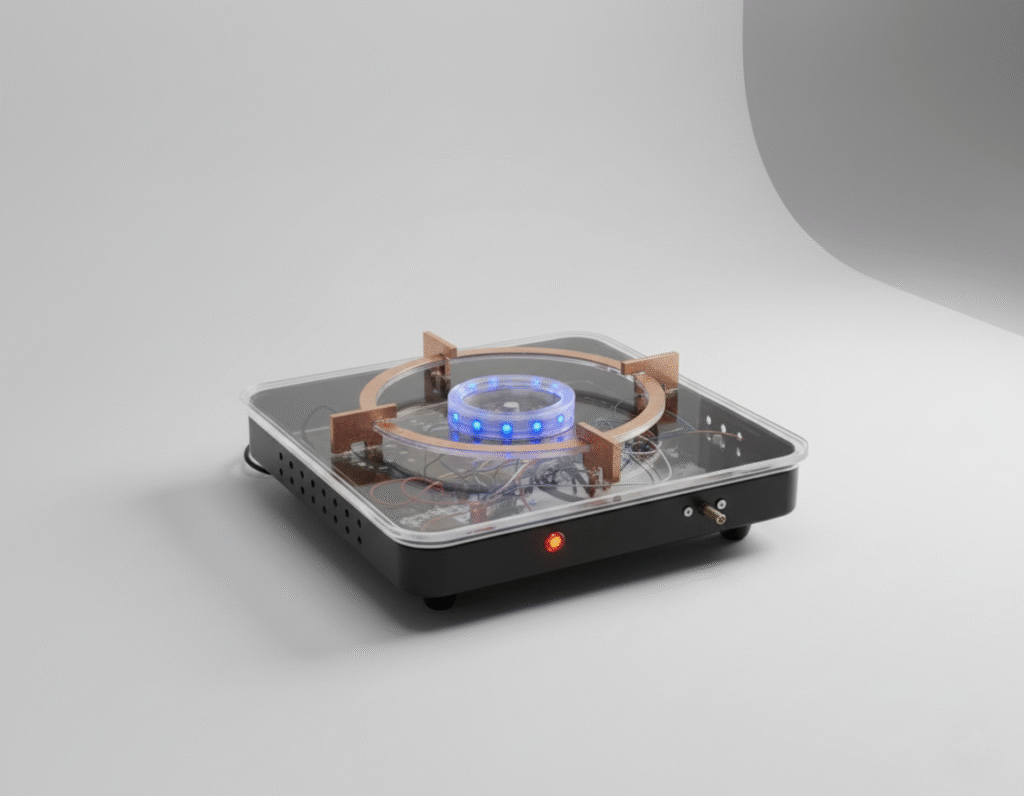
Words about the project: the machine as salvation, technological blindness and the poetics of design
We spend our lives interacting with objects and interfaces whose underlying technology we hardly understand; not merely due to their complexity, but also because they were intended to be closed by design – like fences around a property.
Inspired by Bruno Munari (Design as Art, Useless Machines), Marcel Duchamp’s ready-mades, and contemporary theories on technosolutionism and hacking of McKenzie Wark (A Hacking Manifesto), the ultimate goal of the project was to create a deliberately pointless (more than useless) poetic machine, intended to serve as an object for critical research. The unveiling of purpose serves as a “rich soil” to explore the paradox of technosolutionism: we pin all our hopes on the idea that technological advancement is the solution; yet, with every new machine invented, we have less understanding of how it works and what it exactly helps us with.
These hypercomplex machines strip us of an object-oriented perspective and elevate technology and design to something almost divine – a practically ascetic entity, whose mechanisms we do not know and deem too complex for our understanding. The machine becomes a god, and design the testament.
There is no shortage of theory and practice that seek to redefine the object or even completely destroy its meaning. Here, we seek to separate design from a classical notion of productivity. In design, there is an ingrained notion of optimization and salvation—design as the answer to the world’s problems. However, design can find an important role as a method, on a personal level that does not necessarily transform it into a functional product. Its function lies in the individual experience of those who created it.
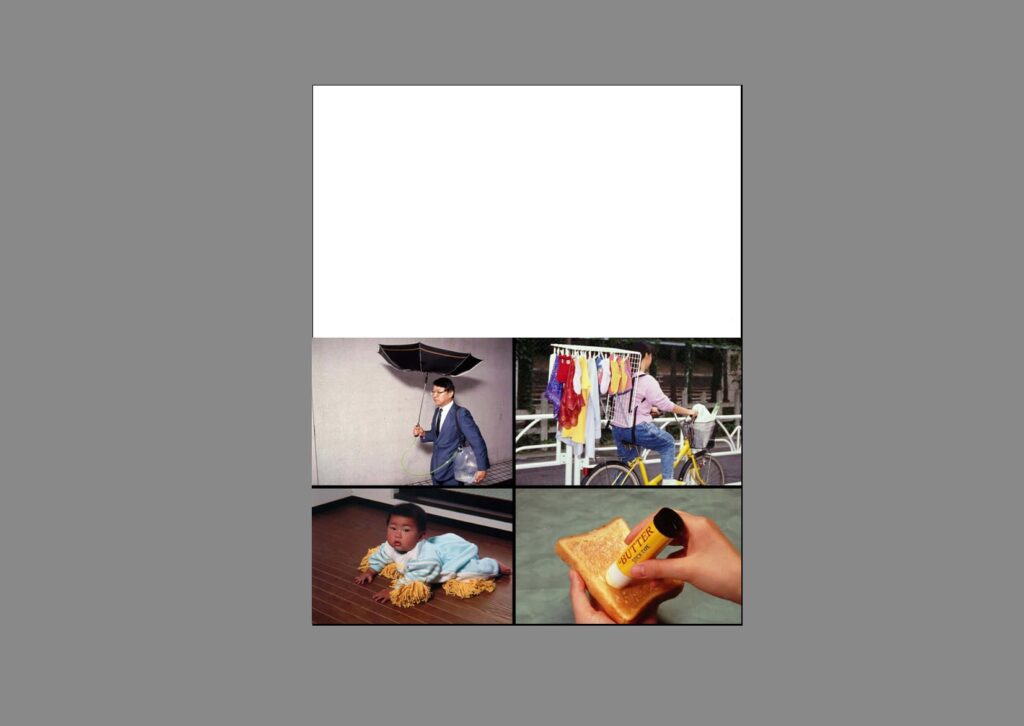
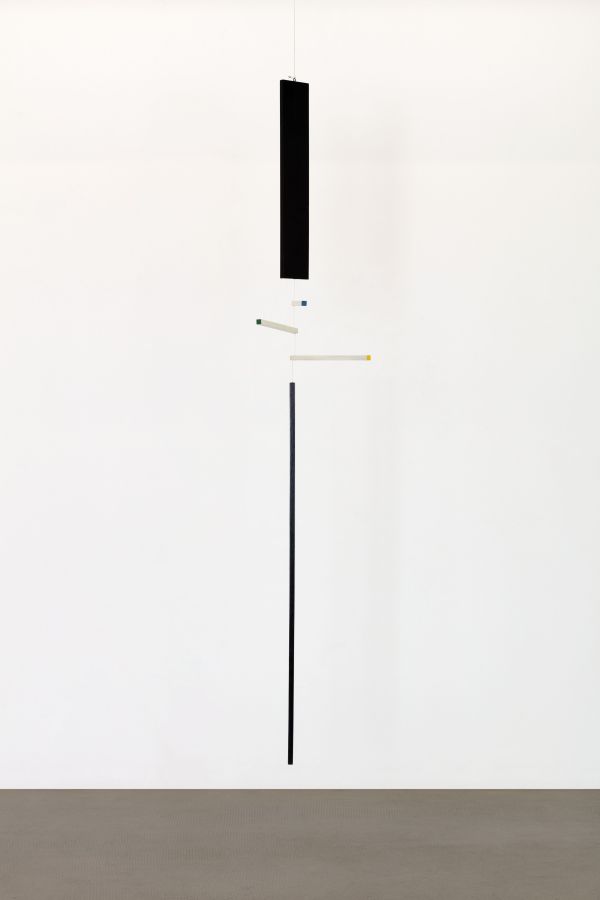
Courtesy Kaufmann Repetto, Milan
Photo by Andrea Rossetti
Words about the methodology
This project relies on a RtD (Research Through Design) methodology developed by FabLab Barcelona and Advanced Architecture Barcelona, based on MIT rapid prototyping course MAS 863: How to Make (Almost) Anything, and the Exploring Emergent Futures platform at the Royal College of Art, London, a program developed by James Tooze and Tomas Diez.
The methodology consists of approaching design in a multi-scalar way, understanding that design should not initiate in a global scale as a problem-solving “miracle tool”, but to start on a personal, autobiographical scale, using personal questions and poetic choices to explore a given subject in a truthful and empathic perspective, instead of an impersonal, ‘user-oriented’, ‘one solution fits all’ approach.
Many of the problems design created today, especially in the digital realm, came from understanding it as a universal power of improving and enhancing in a large, multimillion-dollar economic scale.
The methodology therefore focuses on the poetics of function and research, like what artists and institutions like Bruno Munari, School for Poetic Computation and the Japanese movement Chindogu defend as design.
Phase 1: forensics of obsolescence
The first step in creating a machine was to empirically explore, within our technical limitations, how existing machines worked. To do this, we drew on the Forensics of Obsolescence methodology. Through the process of hacking and dismantling, we explored the internal components of broken or dysfunctional everyday technology—from coffee machines to Wi-Fi networks—while learning how to use open-source software and hardware tools to alter the way these devices function and interact with the world. This gave us the transformative power to reimagine these closed designs and ultimately develop a machine of our own.
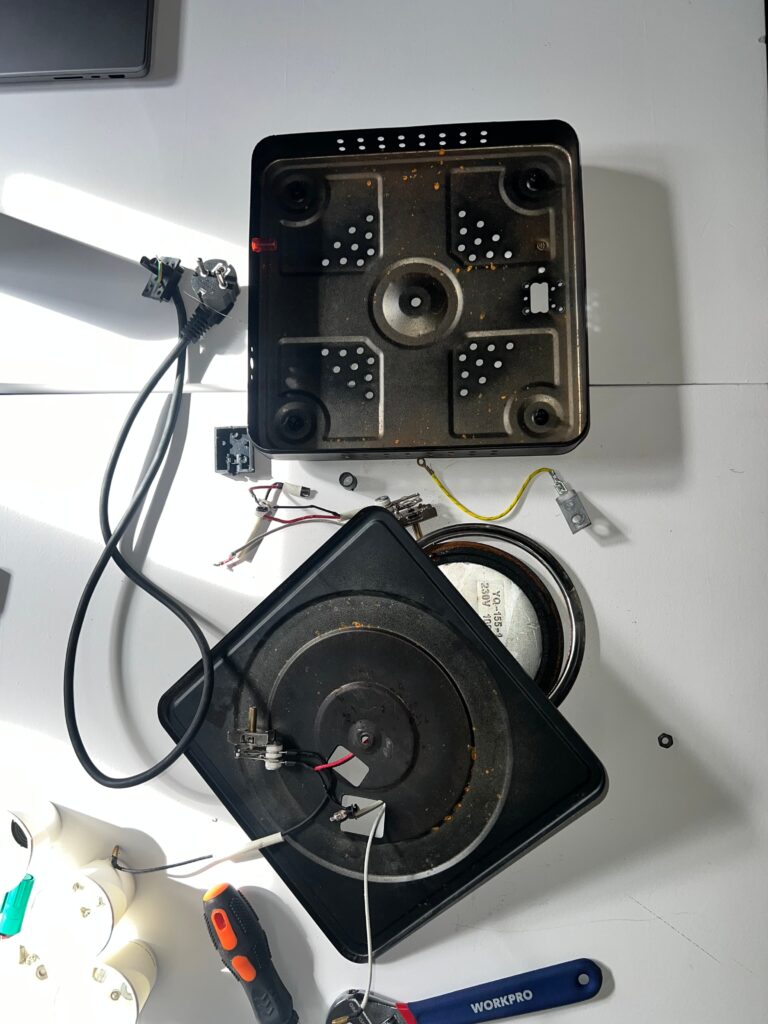
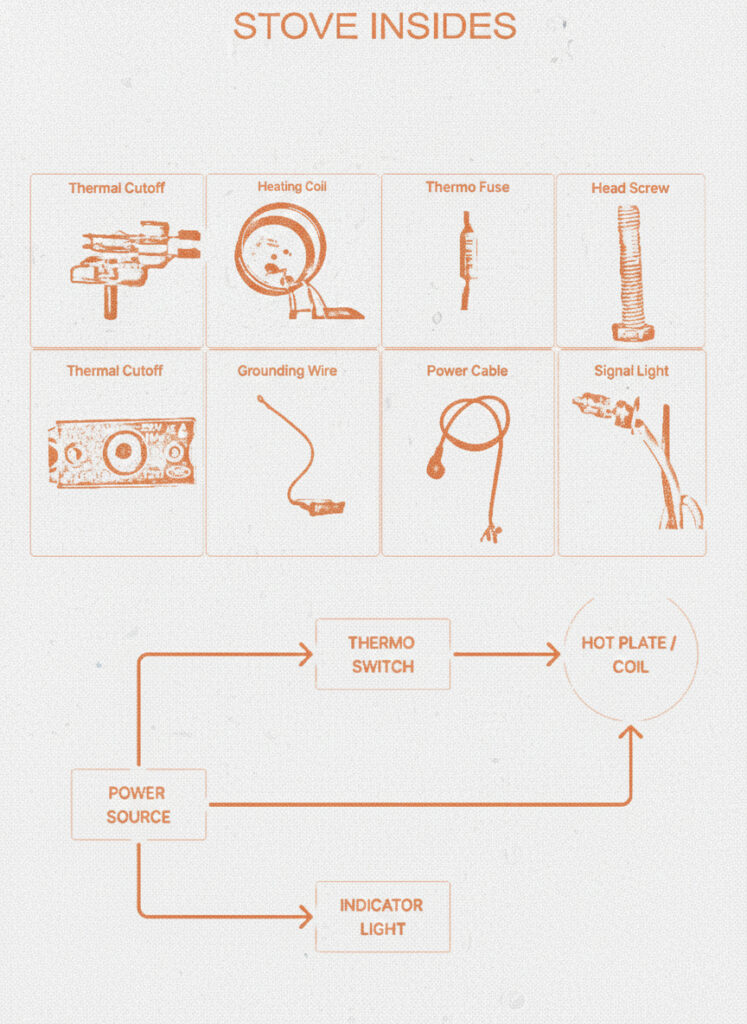
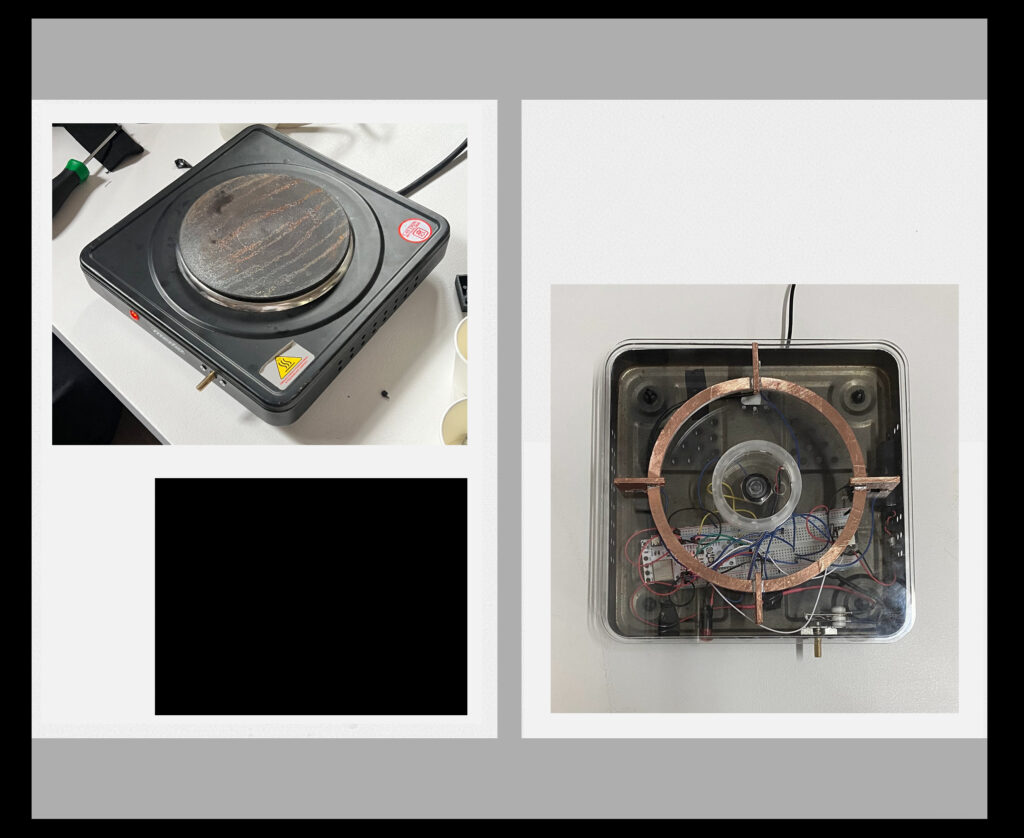
We took apart a defective Mesko stovetop found in the trash and mapped its components, design, and function.
We found out that the only thing wrong with it was a burnt fuse. We didn’t have a spare fuse at hand, so we basically removed it altogether and directly connected the cables. But the stove was fully functional after this.
Second phase: hot stove
The next step was to figure out how to turn the stovetop into a useless machine.
While researching and sketching, it became clear that it was very easy to fall into something too conceptual and artistic. With an artistic direction sophisticated enough, the machine would not be useless as wanted, as it would serve as an artistic statement embedded with a discourse and a message (and a cheap copy of Bruno Munari’s Useless Machines, a great work of art). Which was not the project’s intention. Its intention was to convey complete “pointlessness”(lack of function), and not making observers perceiving a message and having intellectual insights about it (a function) was crucial. Therefore it became a necessity to distance the machine from aesthetics and conceptual tidiness.
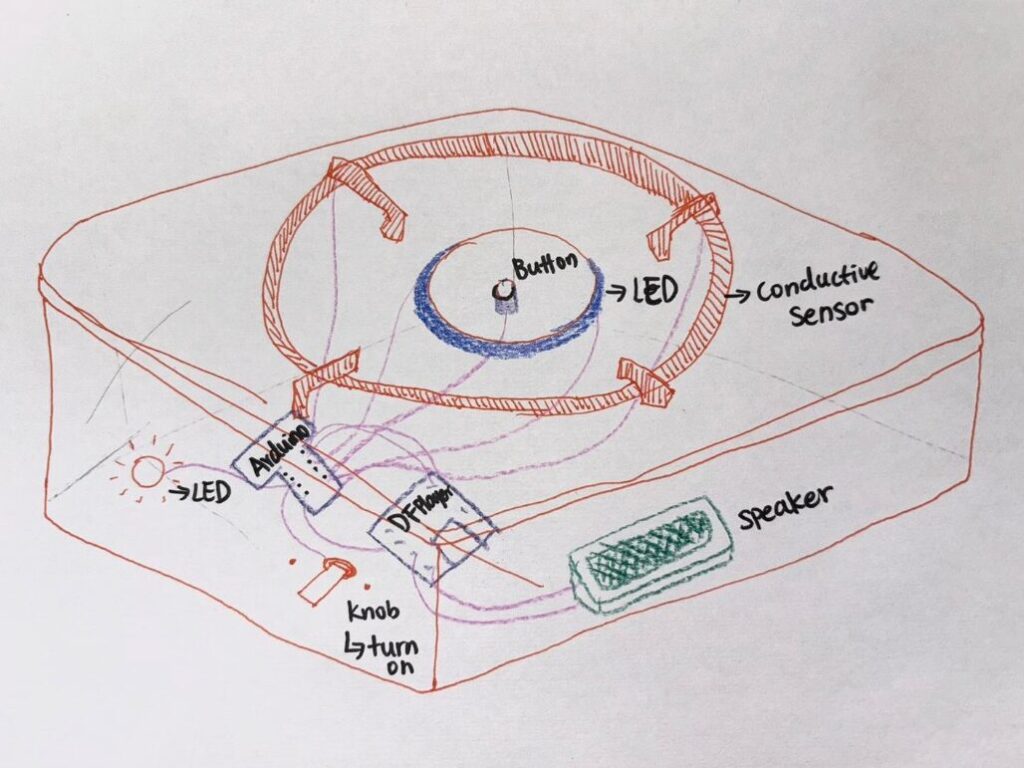
To distance ourselves from something that looked like a discursive, meaningful work of art, we arrived at our definitive scientific question:
What is the dumbest, most obnoxious object we can make out of this concept? Something that no one would take seriously at all? Much less convey a complex message?
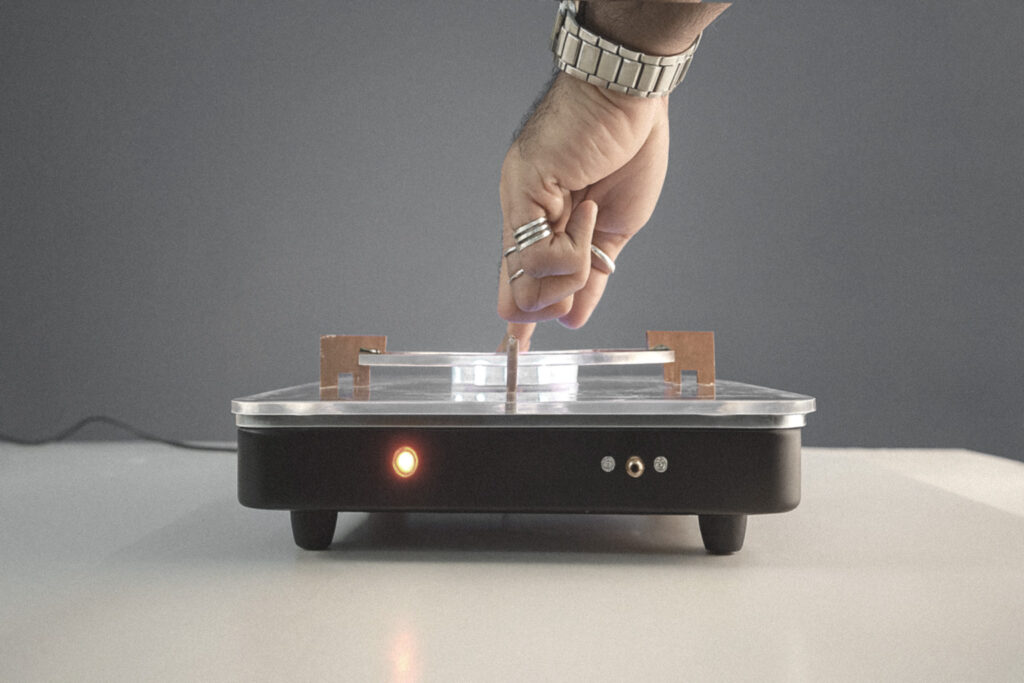
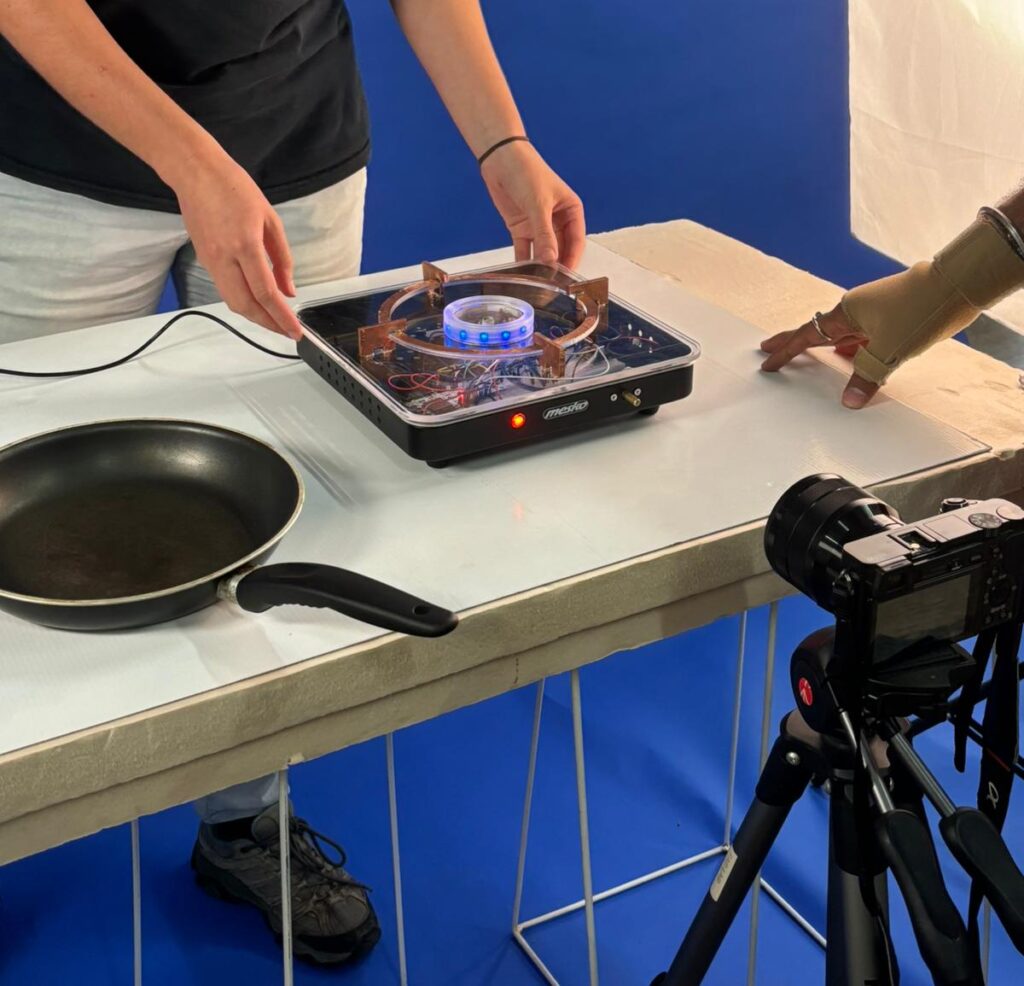
That is how we settled on making a stove that moans when you touch it. A ridiculous wordplay with the warning that came on the stove: “Don’t touch it when it’s hot”.
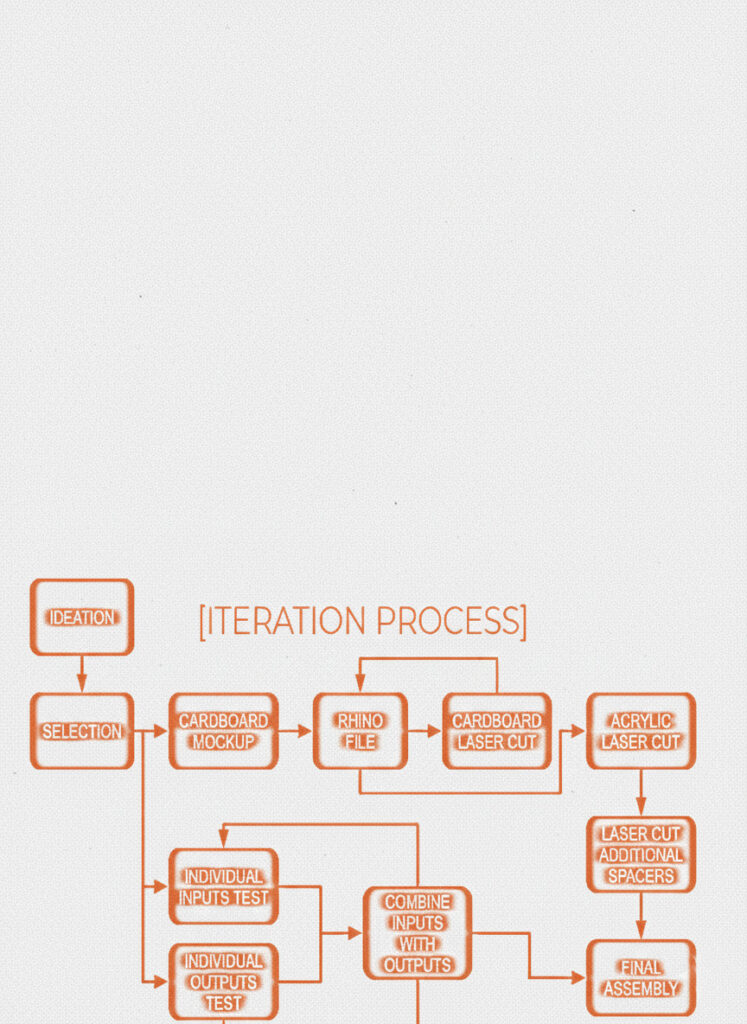
Design plan flowchart and final 3D prototypes.

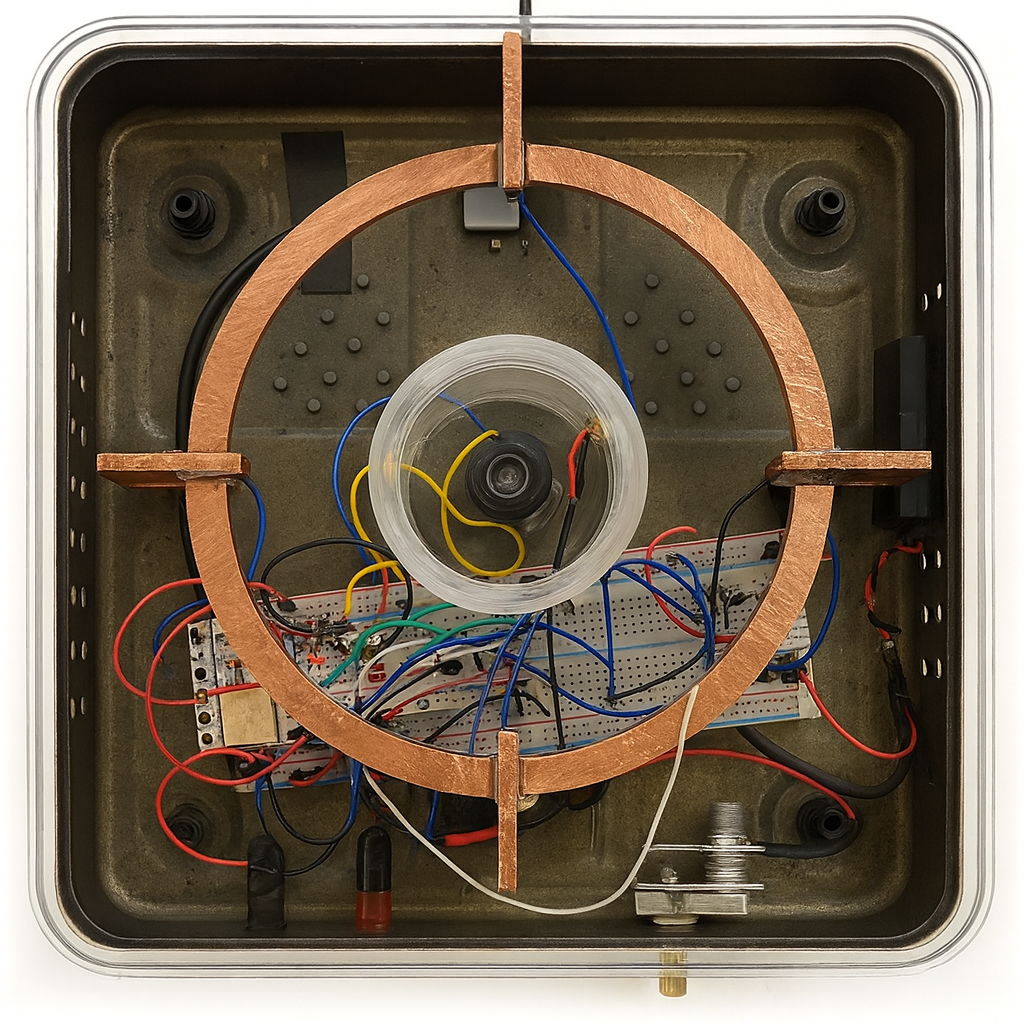
Before, during, after.
CREDITS
Project:
Paula Rydel, Lucretia Field, Mohit Chopra, Erik Gütschow
Fabrication:
Paula Rydel, Lucretia Field, Mohit Chopra
Text and Case Study:
Erik Gütschow
Additional Resources:
“Munart (Bruno Munari’s Archive).” Munart.
https://www.munart.org
“Chindogu.” International Chindogu Society.
https://chindogu.com/ics/
“Chindogu: The Art of Subverting Useful Objects.” Pen Online.
https://pen-online.com/design/chindogu-the-art-of-subverting-useful-objects
“Marcel Duchamp and the Readymade.” The Museum of Modern Art.
https://www.moma.org/collection/terms/dada/marcel-duchamp-and-the-readymade
“School for Poetic Computation.” School for Poetic Computation.
https://sfpc.study/