Category: research

  • The story is only as good as the thief


    There is a scene in the film Bruce Almighty in which Jim Carrey, recently named God, can suddenly hear everyone who is currently praying inside his head, all at once. The Louvre Museum sounds a lot like that: an endless labyrinth of stairs and corridors, full of strange voices and bodies — human and beyond — from stroller-powered babies to 10,000-year-old glaring statues. If you’re planning to see everything in one day, you’d better dust off your running shoes; you’ll have to cover almost 15 kilometers worth of corridors, stairs, and galleries. If you spend 30 seconds looking at each piece, it would take you 100 days to see it all. Maybe you should skip the trip altogether, limit the artistic dosage to a nice French bottle label and enjoy instead the familiar insides of a wine in the comfort of your home.

    Even if you are two bottles deep, and your house is no closer than 10 thousand kilometers from Paris you most definitely know where almost all the Louvre visitors are headed to: Mona Lisa. Yet, can you guess what the other most visited places are? Mona Lisa is actually number two. The most visited place in the Louvre is its entrance: the Pyramid, by legendary Chinese architect I.M Pei; basically because you don’t need a ticket to see it. In third place is Venus de Milo by Alexandros of Antioch, one of the most known artworks in the world. Then there is the Winged Victory of Samothrace, which was carved around 190 BCE by an unknown artist. You probably never heard of it, but visitors spend more time looking at this sculpture than they do at the Mona Lisa, not because it is particularly famous, but because it is located at the top of a staircase where people usually go to sit and rest. At fifth place is the floor-to-ceiling painting The Wedding Feast of Cana by Veronese. Also an accidental visit: it is in the same room of Mona Lisa, across from it.

    Then we have this:
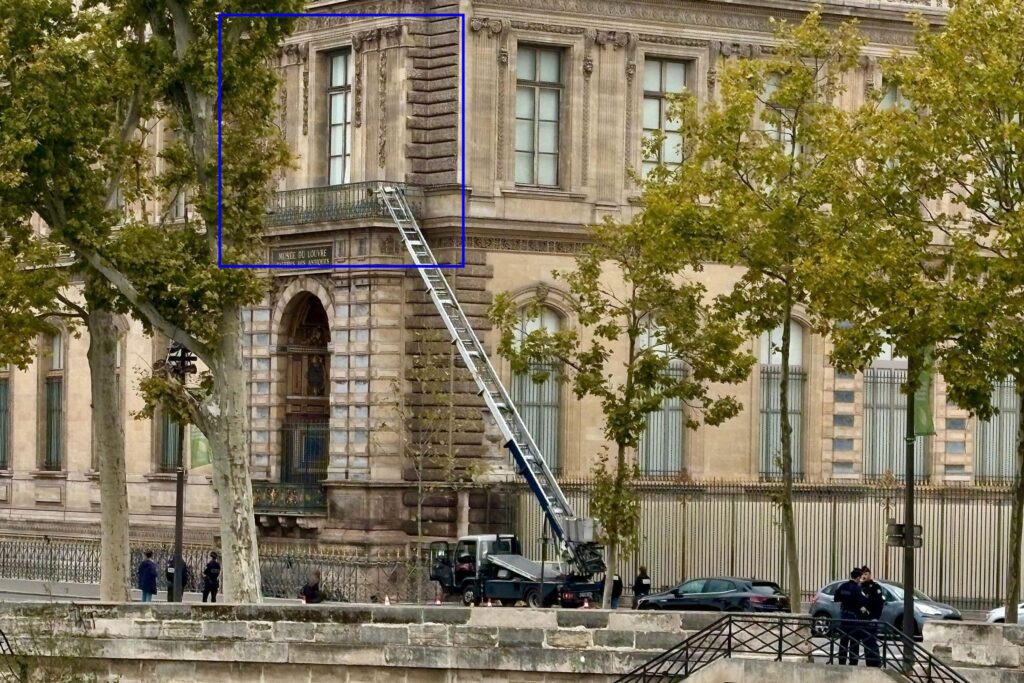
    A truck with a ladder used by the thieves is seen at the Louvre Museum on October 19 in Paris, France. Photo by Alexander Turnbull/AP.

    This balcony has been one of the most visited and photographed places in all the Louvre in 2025. It was from here that the recent the Louvre Heist took place. The thieves used a furniture lift to break in and steal 102 million dollars worth of French imperial jewelry. Then fled in electric scooters. The whole thing lasted about 7 minutes. It was October 19, 2025. A busy Parisian Sunday.

    The heist seemed like something out of a Tom Cruise movie – even the suspects in custody look like movie stars – it made a simple balcony become one of the most popular destinations in all of Paris, and it is still unsolved to this date. The aftermath revealed how unbelievably poor security there was in the less visited part of the museum, which keeps an immeasurable amount of wealth in artworks and historic artefacts. Even considering all these facts this was hardly the most notorious robbery that took place in the Louvre Museum. In 1911, Mona Lisa mysteriously vanished from its gallery in the Louvre. Pablo Picasso was then brought in by the police as a suspect for stealing it.

    All began when Ga’ry Pieret – the youthful secretary to poet-critic Guillaume Apollinaire – asked Picasso if he wanted anything from the Louvre. Pieret told him how easy it was to steal from the under visited parts of the museum. Probably out of a request from Picasso, Pieret brought the artist two ancient Iberian stone heads, that stayed with Picasso for quite a while. The sculptures influenced him deeply, Picasso used them as reference for the nudes in Les Demoiselles D’Avignon, arguably his most famous work and the boldest attack on classical European art the world has yet seen – at least according to Yve-Alain Bois.
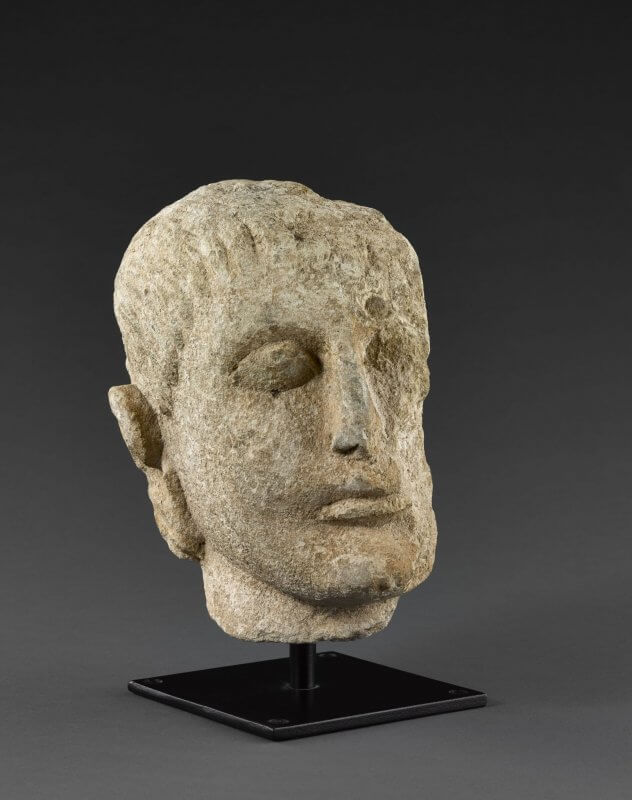
    Iberian sculpture, male head; stolen by Géry Piéret in 1907 at the request of Pablo Picasso.
    3rd century BC.
    Limestone, 20 × 17.5 × 13 cm.
    Paris, Louvre Museum, Department of Near Eastern Antiquities.
    © RMN–Grand Palais (National Archaeology Museum) / Franck Raux.

    When Mona Lisa’s disappearance made headlines, Pieret wanted to surf the hype and came to the press to brag about how easy it was to steal from the Louvre’s collection, confessing his deeds with Picasso and Apollinaire. Worried about the repercussions, both poet and artist came forward and returned the stolen stone heads. The news made headlines throughout France and abroad, highlighting Picasso’s involvement. The Paris police were equally interested, and brought both artists in for questioning on the matter, concerned that they had played a part in the robbery of Da Vinci’s masterpiece.

    In fact, none of them, including Pieret, had anything to do with the Mona Lisa heist. The culprit ended up being a former Italian employee by the name of Vincenzo Peruggia. On a Monday, when the museum was closed for the public, he dressed for the last time as a Louvre worker, took the painting out of its place in Salon Carré, put it under his coat and calmly walked away. Back then there were no alarms or guards. However, at the exit, he just couldn’t make the doors open. Another employee came to see what was happening; only to cluelessly help the thief leave the museum with its most prized artwork under the arm.
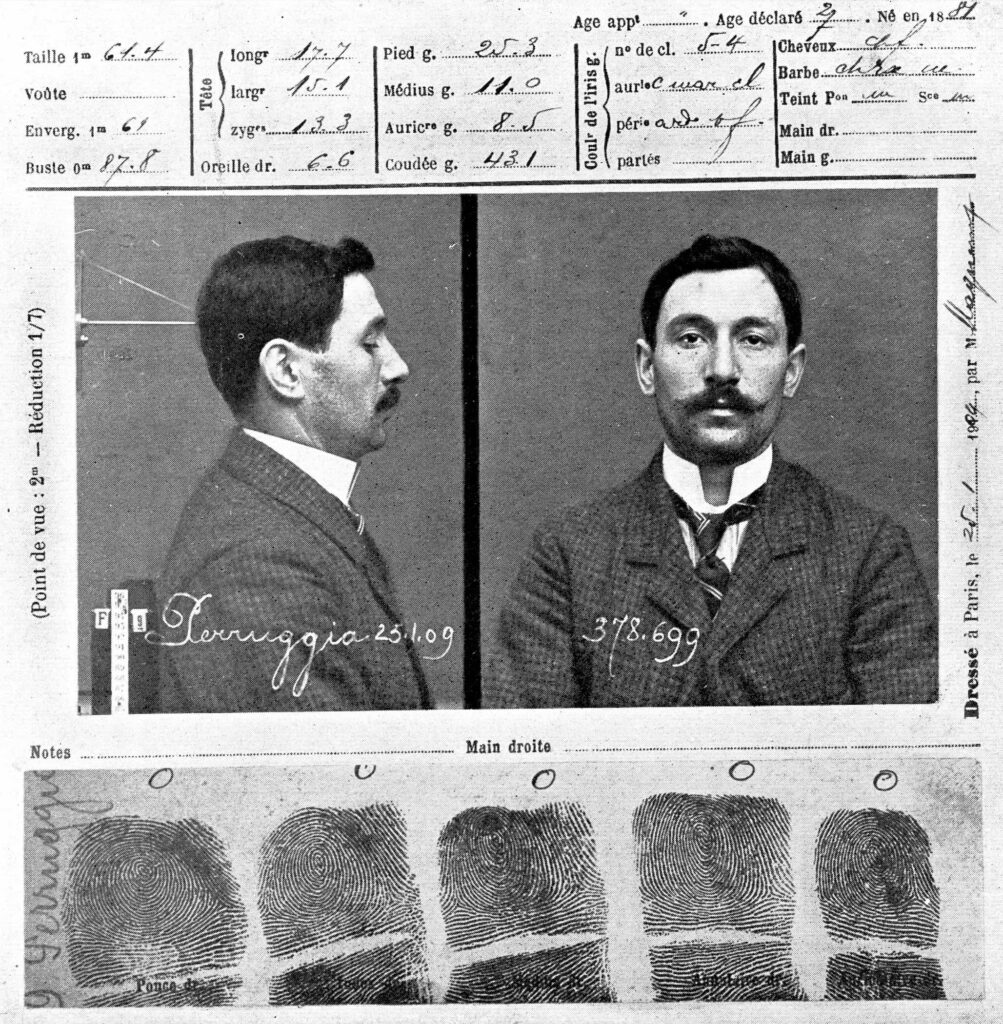
    The police record of Vincenzo Peruggia who attempted to steal Leonardo de Vinci’s painting ‘The Mona Lisa’ in 1911, 25th January 1909. (Photo by Roger Viollet via Getty Images).

    And during two years, Mona Lisa sat quietly in Vincenzo’s small Parisian apartment. Imagine having the most famous artwork in the world sitting in your bedroom for almost two years, Mona Lisa’s gaze and smile scanning through your pile of dirty clothes.Vincenzo said later that he believed the painting was stolen from Italy, and wanted to return it to his country – eye for an eye. I don’t know if his true intentions were as patriotic, but in 1913 he contacted an Venetian art dealer, trying to sell the painting to an Italian museum. The dealer immediately alerted the authorities, and Vincenzo was finally arrested.

    He spent 7 months in a French jail. Back in Italy, some viewed him as a misguided art robinhood. And although a few years later no one would remember Vincenzo’s name, his deed would impact the art world forever. The robbery changed Mona Lisa deeply. Before, it was an important work: it was painted by genius, the lady portrayed was enigmatic, it was a brilliant display of classical techniques, sure, but its narrative for the public was cold, distant, idle. After the theft, the artwork was catapulted to unprecedented fame, its subtle smile became a scream, or better: a talkative mouth in a lively dialogue with the public.

    The buzz about the crime embedded the painting with a new story, one that was loaded with very popular genres: crime, mystery and even an international beef. The appeal of this new twist also increased the interest to the painting’s other qualities and historical facts.Vincenzo’s robbery was like adding a Sharpie-drawn wink to the Mona Lisa. Suddenly, there was an extra layer to its meaning and appeal. Except that the Sharpie’s ink was invisible: a silent vandalisation that left no marks. 

    When people say art is never finished, they usually mean that there is always an extra possibility to its making: an additional hue of blue here, a better word there, a different camera angle. However, at some point, the artist has to stop. But art is also unfinished in another sense: no matter what, it will keep changing long after its maker is done with it. No matter how subtle it is – the piece keeps changing like a living organism. It is like a work of art lives forever dancing with time and space; and, like a dancer that uses the next second to slightly alter their pose, so in a matter of minutes their performance can convey a completely different emotion, an artwork exchanges dialogues with environmental forces to change what it has to say.

    Every time an artwork is moved from a location to another, every time that it is presented in a different exhibition, paired with different works, or being endlessly remixed and reproduced, something changes. And being robbed is no different. The thief is a potent igniter of meaning. He is responsible for agitating the linguistic surface of the painting, creating new knowledge about it, creating a dialogue that is very appealing to the public: a dialogue of violence.

    Alfred Hitchcock was obsessed with crime stories because he considered them the ultimate instrument for playing with human emotions. Crime narratives are very engaging, from them we are able to experience the thrills of violence without the consequences. Violence calls from emotion, empathy and attention. A person becomes more relatable in our eyes when it becomes a victim. And an artwork is no different.

    But not all crimes are equally influential. Other fact that make the conversation about thefts like the Louvre heist and Mona Lisa’s so powerful is that they were not immediately solved. The absence of knowing for sure. The absence of seeing completely lies on the essence of a exciting story. If Hitchcock was obsessed with crime as a subject, he was the master of suspense as a structure. A powerful framework that feeds of immateriality: what is not there. The story is just as good as the thief.

    What image is more powerful? That of an explosion. Or of a boy holding a suitcase. And what if I said that inside that boy’s suitcase, maybe, just maybe, there is a bomb, would it change your answer? Again, we return to the effects of the “invisible Sharpie wink”. Nothing has happened; you don’t see the bomb. You don’t know if it is going to go off. But the anticipation of that “boom” cannot get out of your head. The balcony is empty. Nothing is happening there. But you cannot help but imagine the entire heist in your head. It is like the balcony, the suitcase, Mona Lisa’s empty room is saying something to you. Hey, a robbery happened here, will maybe the thieves return for more? Hey, I am going to explode soon… Or maybe not. The boy with a bomb scenario was used by Hitchcock himself. The scene is in his 1936 movie Sabotage. And the director uses it to explain the essence of his storytelling in his interviews with François Truffaut.

    Would Mona Lisa be the phenomenon that is today if Vincenzo hadn’t added his twist to its history? And would it be so famous if Vincenzo wasn’t able to leave the museum and was caught immediately, removing all the suspense from the crime and the paintings whereabouts?

    Although robberies have always played a significant role in art, they have largely been overlooked as a subject of analysis throughout most of its history.

    We have to thank thinkers and artists that opened our eyes to the impact of the effects of art beyond its internal systems of colour, contrast, representation, materiality and so on. And that art is also an unstable, living dialogue with the people and places that surround it. Funny enough, to get to this realisation, more crimes were committed as part of the process. Especially the burning of vehicles – but “for a better end”, “Vincenzo” way.

    In the protests of May 1968, colliding with an ever-growing authoritarian reality, students came to realise that production of knowledge was not a neutral force. It was governed by relations of power and context. In the realm of philosophy and linguistics, authors like Michel Foucault and Émile Benveniste articulated ideas on how language is influenced by these relations. When people talk, there are always shifting parts that do not depend of what is being said, but how, where and by whom is being said: not only the form and content convey meaning, but also the discourse. 

    In the visual arts, artists started experimenting with the influence of these changing forces on an artwork.

    In 1973, the French artist Daniel Buren presented a work which consisted of unframed, suspended canvases; they were set up in a line that started inside of the an art gallery in New York City, but extended far off of it. The paintings continued out of the window, crossing the street and finally ending tied to the building across the street.

    The pieces that hanged above the jammed traffic and the ones that hanged before the white gallery walls were basically the same: hand painted with a basic pattern of grey-and-white stripes. But they sparked different ideas. Depending of their place, they appeared to be a minimalistic, color field style painting, like Mark Rothko’s and Barnett Newman’s, or just sheets hung to dry.
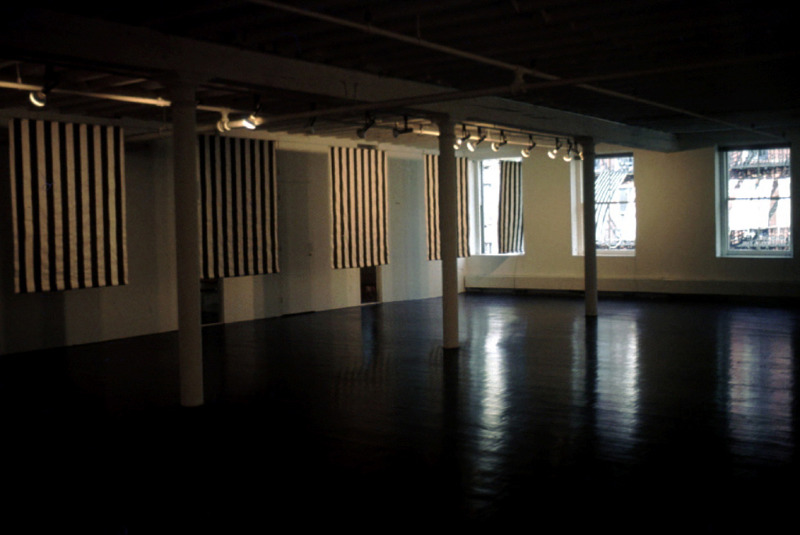
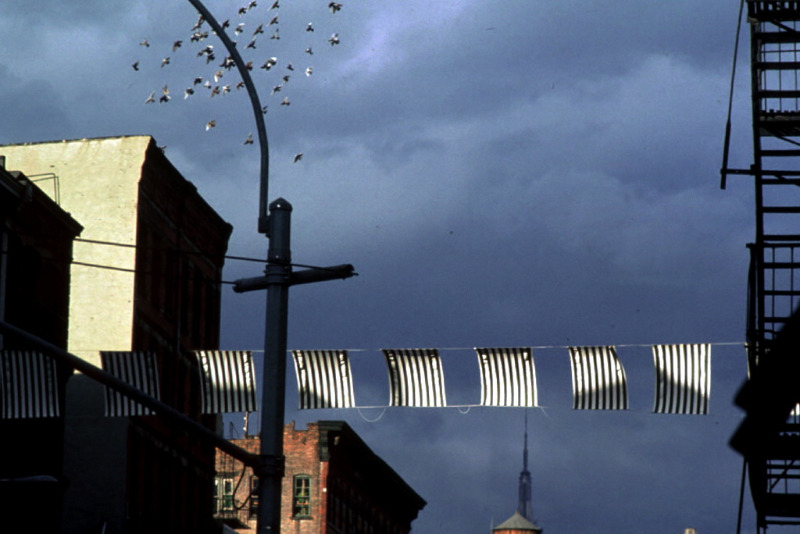
     Within and Beyond the Frame”, 1973, John Weber Gallery, New York, USA. © Daniel Buren/Adagp, Paris.

    The art gallery is designed to convey uniqueness, authenticity and scarceness, so that art is able to live in a parallel dimension from everyday things. But what happens to an artwork when it leaves the frame of the gallery, and people see first a flag, an ad or a towel awaiting to dry? Did Mona Lisa stopped being a masterpiece when it stood amidst Vincenzo’s socks and pillows? Would a clueless friend see to it more than an old-fashioned piece of decoration Vicenzo brought in to make his flat look nicier?

    If Daniel Buren’s canvases were stolen, would the ones inside the gallery be worth more than the ones hanging above the streets? Burens shows us how art absorbs meaning from the context and relations of power (in this case, the authority of the gallery). Another famous anecdote in the world of art that exemplifies this is when an accidental object inside of a museum or gallery is mistaken with a work of art: like a soda can or shoe lace.

    The gallery and the gallerist, from their place of authority, produce knowledge about the piece: it is art; it is conceptual; it is valuable; it is unique. In a similar way, the burglar does the same, from a place of forceful power, and which the media perpetuates even further: this very valuable historical object was robbed without much trouble, the Louvre is incompetent, Picasso was one of the suspects, it stayed “lost” for 2 years, where was it? And so on.

    This way of analyzing art can – somewhat, this is by no means an academical essay on art criticism – be called post-structuralism. Which mean recognizing that art lives in a system of its own (structuralism) and then understanding that it is not a closed system, it exists in a complex and unstable context of forces.

    And if the discussion about the relevancy of art theft was dormant before, right now, it seems to be in an all-time high. Besides the cinematic Louvre heist, there was a more recent one that happened in Sao Paulo, Brazil, where a bunch of Matisse and Portinari engravings were stolen in plain daylight without much effort – maybe they were inspired by their Parisian counterparts.

    Also recently, the Louvre has created a new executive position: Art Theft Specialist; however, the job has little to do with the recent heist. It is not about pursuing glamorous security solutions like Mission: Impossible–like lasers or replacing gallery sitters with an army of black-belt soldiers. The new official position of the museum puts art theft in a different perspective, one that you probably thought about when hearing the words stealing and art beside each other: colonialism.

    “They stole from the Louvre? Well, the place is full of stolen stuff to begin with.” And that is completely true.

    The Louvre’s foundation is rooted in ideals about art that aged very badly. The idea was to bring – that is, steal – art from all over the world so it can be displayed where, in their minds, it would be rightfully appreciated: Europe, and Paris as the universal capital of art and culture.

    The art theft specialist Bénédicte Savoy’s jobs is precisely to deal with this absurd idea of universal, encyclopedic art that crossed many decades. How should European museums deal with years of pillage of culturally relevant objects in other countries? Recently, Savoy was involved in the return of twenty six artifacts to the West African country of Benin, which is documented in the 2025 film Dahomey by Mati Diop, a French director casting light on the new narratives of identity in the French-spoken world.
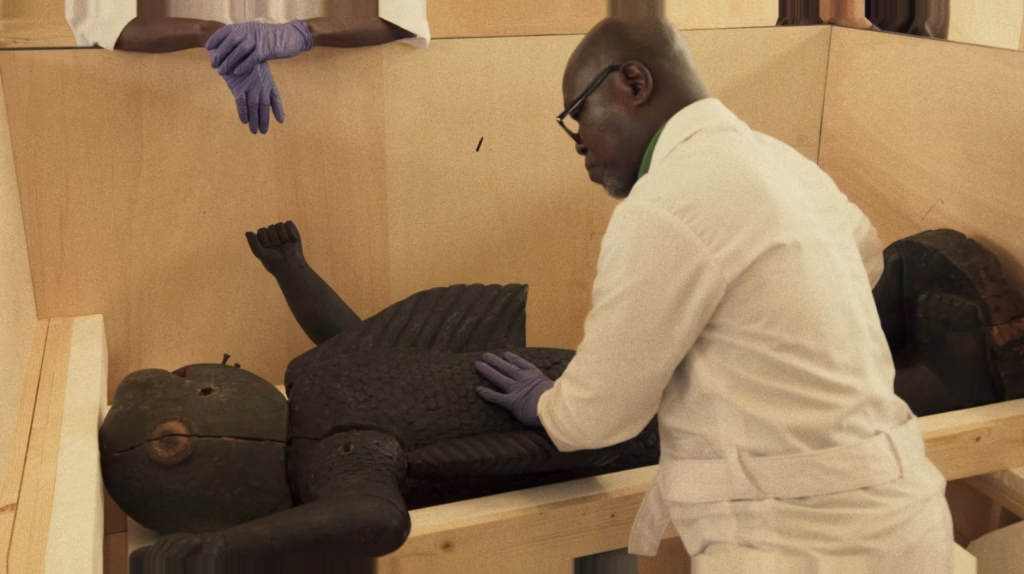
    Film still of Dahomey, 2024. Directed by Mati Diop

    At one point, the film features an open talk in Benin about the return of such artefacts. The citizens opinions were diverse: some say that twenty six pieces is not nearly enough, considering that the French government possesses thousands of them that should be returned to the country, and this seems more about France trying to dignify itself than to actually make a change. Others argue that at least it is a beginning, and the return of such historical objects have immeasurable value to the locals.

    Only time will tell if this is just for show or if European countries are actually serious about art reinstitution. One thing that nothing can change, is the impact of theft in any stolen object. They are returned. Which loads them with a completely different meaning than if they had never left their birthplace to begin with.

    A young artist in 15th-century Italy was struggling to find his style and his path to success. In need of money, he created a statue in the style of the Roman Imperial era, which was popular with wealthy collectors. He chipped and dented the marble, used an acid solution to corrode its surface; buried and unburied it so that it would look like a recently discovered masterpiece from the Roman period, over a thousand years old. He sold it as a genuine artefact to a cardinal, who eventually discovered that he had been scammed. Rather than condemning the young artist, however, the cardinal was impressed by his ability to copy the old masters and invited him to be his protégé in Rome. The cardinal was an important figure in the Church, and under his tutelage, the young artist thrived. He soon received commissions to produce the works that would carve his name forever into the history of art: The Pietà and David.

    Now, that artist, Michelangelo, has a Louvre gallery named after him. To get there from the main entrance, it would take you a lot longer than the thieves took to steal the imperial jewellery from the most famous balcony in France. In the gallery, you can see sculptures and drawings by the Italian master. What you are not going to find there is the Madonna of Bruges, a famous work of Michelangelo that was stolen by the French during the Revolution Wars. It sat in the Louvre for 20 years, or should I say Musée Napoleon, which was its official name during the Napoleon regime. The statue was returned after the fall of Napoleon, but there are more than a few Michelangelo’s sketches that remain there that were looted – stolen – by the Napoleonic “art scouts” in army campaigns in Florence, Rome and Venice. Napoleon was a big fan of Italian art, it seems, because he also ordered Mona Lisa to be taken down from its place in the Louvre; then he put it in his bedroom. Like Vincenzo did, kind of.

    Perhaps, when it comes to art, the thief is second only to the artist, that is, when they are not the same person.


    Main Sources and Further Exploration

    “100 Days to See Everything in the Louvre.” AOL.

    Dahomey, directed by Mati Diop, 2024.

    Within and Beyond the Frame, by Daniel Buren. John Weber Gallery, 1971.

    The Philosophical Brothel, by Leo Steinberg. University of Chicago Press, 2001.

    “Mona Lisa Theft: How the World’s Most Famous Painting Was Stolen.” The Guardian, August 5, 2011.

    “Matisse Art Works Stolen from São Paulo Museum.” CBS News.

    “The Burgled Louvre’s Stolen Art Expert.” The New Yorker.

    “Mona Lisa Theft: Picasso, Apollinaire and Gery Pieret.” Montmartre Footsteps.

    “Poststructuralism and Deconstruction.” Redalyc.

    “With the stylistic inconsistencies and primitivist impulses of Les Demoiselles d’Avignon, Pablo Picasso launches the most formidable attack ever on mimetic representation,” by Yve-Alain Bois. In Art Since 1900: 1900 to 1944. Thames & Hudson, 2016.

    “Poststructuralism and Deconstruction,” by Rosalind Krauss. In Art Since 1900: 1900 to 1944. Thames & Hudson, 2016.

    “Pablo Picasso returns his ‘borrowed’ Iberian stone heads to the Louvre Museum in Paris from which they had been stolen: he transforms his primitivist style and with Georges Braque begins to develop Analytical Cubism,” by Rosalind Krauss. In Art Since 1900: 1900 to 1944. Thames & Hudson, 2016.

    Related Books

    Art Since 1900: 1900 to 1944, by Yve-Alain Bois, Benjamin H. D. Buchloh, Hal Foster, and Rosalind Krauss. Thames & Hudson, 2016. Buy on Bookshop.org

    Art Since 1900: 1945 to the Present, by Hal Foster, Rosalind Krauss, Yve-Alain Bois, and Benjamin H. D. Buchloh. Thames & Hudson, 2016. Buy on Bookshop.org

    Modern Art: Selected Essays, by Leo Steinberg. University of Chicago Press, 2007. Buy on Bookshop.org

    *Bookshop.org does not sponsor us, but purchases from affiliated links support our work (at no additional cost to you) Also, every purchase on Bookshop.org financially supports independent bookstores instead of billion-dollar companies.  Learn more
  • Lethal films and stone poems: the death of Jūzo Itami


    Sometimes, our dreams feel like sequels to the films we’ve watched. It’s easy to turn the TV off when a story gets a bit too creepy. But who’s to say that what you just saw won’t follow you in your dreams? What makes a movie truly terrifying is not some devilish creature, but how little we know about our own minds: inside it, there are many dark corners that we just can’t grasp. Once the lights are out, your eyes are heavy and you begin to drift off, you may find yourself back in that film once again. Now, there is no button to turn it off at will. The screen has eaten you whole. And out of some shadow comes the creature.


    But eventually, everything is gonna be fine again. You will wake up, maybe gripping the sides of your bed in despair, but soon it will dawn on you that it was just a silly dream. Luckily, you will forget about it altogether. But what if a film follows you not into your dreams, but into your reality? What if the creature comes not from an obscure corner of your mind, but from an alley close to your house? What if the film actually… kills you? That is, perhaps, what happened to Juzo Itami. 

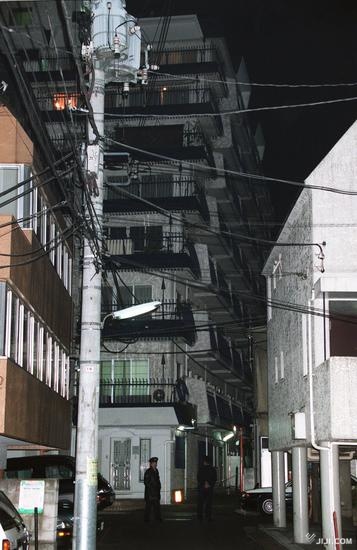
    Around 6:30 PM on December 20th, 1997, a dead body was found in the parking lot of a luxury building complex in Tokyo. The authorities identified it as being Yoshihiro Ikeuchi, a 64 year-old man that worked in an office right above where he was found. He was one of the most notorious personalities in 80’s and 90’s Japan, yet hardly any of those who first discovered his body would have recognized his name. But his reputation was too great to stay unnoticed for long, and soon people started to figure out that Yoshihiro Ikeuchi was the real name of the famous film director, Jūzō Itami. The media coverage was not shy of one concerning the death of a Head of State. Soon, most Japanese citizens knew that Itami was dead, and of all the tragic circumstances. 

    “It is believed that Mr. Itami, dressed in casual clothes and wearing sandals, fell after climbing over a railing about 1.2 meters high from the rooftop of the eight-story apartment building.” (December 21, 1997) [Jiji Press]

    To say cinema was in Itami’s blood is barely a figure of speech. His father was a filmmaker and satirist who became known for his subversive samurai stories in the 1930’s. But at first, Juzo didn’t want to carry on his dad’s legacy, and turned instead to boxing, band managing, many other things, before eventually hitting his luck with a curious, quirky mix of acting and writing. The former is what made his star shine the brightest at first: he became an accomplished essayist and well-rounded storyteller; he founded and edited a quite unique magazine called Mon Oncle (named after the Jacques Tati film), which spanned from cosmopolitan adventures to in-depth essays on psychoanalysis. And it is merely a taste of the over-the-top, whimsical style that he would carry on throughout his career. 

    His big breakthroughs in acting came in the 1960’s; and his fluency in the English language made him a go-to choice for international film. He played alongside Peter O’Toole in the seaborne drama Lord Jim (1965), and worked with Nagisa Oshima and Nicholas Ray – it is safe to say that the ambitious young actor learned a thing or two from these two legendary directors. Eventually, his writing and his movie star lifestyle collided into a single authorship: filmmaking. And so he officially became a director at the age of 50.

    His career as a filmmaker is marked by his audacious, wry takes on Japanese culture and its rituals. Itami was not afraid of full-blown entertainment and had a particular taste for the absurd. His movies were never underground, but mainstream hits; they combined blunt, easy-going narratives with sensitive topics; a combination that Japanese audiences only found before in foreign films. Japanese movies were known to be sophisticated, profound, and contemplative – and kept some touchy questions out of the screen. Itami changed that. He made an entire, thrill-seeking generation fall in love with their own culture again.

    It was only natural for a style as expansive as Itami’s to keep evolving through the years. Later in his career, the stories got more political, violent, and pressed delicate topics even harder, especially concerning the Japanese mafia: the Yakuza. And this is when his creations began to bite him back.


    Creatures behind half-open doors

    The year was 1992. Itami’s new movie, Minbo: The Gentle Art of Japanese Extortion, was released on VHS and in movie theaters simultaneously. Its initial reception was far from what the director experienced almost a decade before, with the instant hits Tampopo and The Funeral. But shortly after, things changed quite fast. Minbo’s plot mocked the Yakuza right to their faces. Mobsters were portrayed not as stoic, samurai-gone-rogue antiheroes, but as witless bullies after petty cash. The film essentially offered a blueprint for dealing with mafia harassment. Itami knew he was playing with fire, but even he didn’t anticipate what was about to happen.

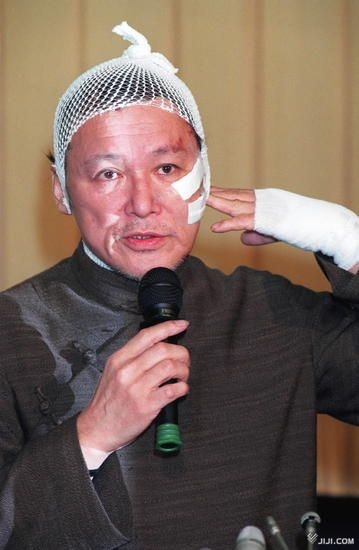
    Six days after the movie premiered, Itami suddenly found himself surrounded by a bunch of knife-wielding men near his house. Pure psychological intimidation was not their goal. He was violently attacked. They slashed his face, neck, and shoulders. They beat him to the ground. And there they left him, staining the sidewalk bloody red. This was Kiri: a traditional Yakuza tactic of scarring their victim for life. They were basically saying: “You can label us, but we can label you, too.”

    Film director Juzo Itami, who was seriously injured in an attack by gang members, was discharged from the hospital and held a press conference in Tokyo. (May 30, 1992) [Jiji Press]
    New York Times Archive.

    The Yakuza’s plan to silence Itami backfired. The incident heightened national interest in both the Yakuza and in the film, which drew large audiences to theaters and video rentals. It looked like, in this scarring game, Itami managed to cut deeper. He stayed in the hospital for 7 days and rocked his scars proudly for the rest of his life.

    Itami realised that making films could actually kill him. His art became something else entirely. There is a certain thrill in taking fiction to the point that expands into reality. Most stories can live in their bubble quite safely, but some writers feel an irresistible urge to take things a step further. One can’t help but to imagine Itami writing the script for Minbo with a racing heart. Stepping on dangerous people’s toes with your movie is maybe, in the least poetic way possible, the closest that fiction will ever get to coming “alive”. Minbo stopped being only a film to become an entity in its maker’s life, peeking out in the shadows. Like a chilly wind that creeps inside your shirt on a walk around the block. Like the darkness beyond a half-open door. The story becomes a beast. A surreal one, given that Itami was not a journalist investigating real facts, he did not have inside information on the mafia, its members and stratagems. He did not know the names of the mobsters following him at night. The strongest and most vivid image of what was happening to him came from his movie, its chemically developed scenes and actors. It must have really felt like he was in one of those “movie-inside-a-movie” scenarios. It is not by chance that he did make a story just like that right after the attack: The Last Dance.

    The Last Dance from 1995, his second last film, was conceived in the hospital after the attack. It tells of an ageing actor-director who, while making a film, begins an affair with his young leading actress; his wife finds out and wants to leave him, but changes her mind when she learns that he has cancer. He considers suicide, but chose instead to live his last years with his family.

    Two years later, this story would read like a chilling, imperfect omen for what came next – imperfect because reality had no plans for feel-good endings.

    Rainy days

    Precipitation in Tokyo on 22 December 1997.

    In movies, the darkest moments often happen on rainy days. On December 22, 1997, Tokyo streets didn’t feel a single drop from the skies. It was a typical winter day: dry and crisp, when Juzo Itami was found dead. All the puzzle pieces spelled suicide. The content of a note left by the deceased made it all clear. Presumably, Itami had learned something that shredded his soul: a gossip magazine called Flash would soon publish a piece about an affair the director was having with a 26-year old woman while still married to long-time partner and muse Nobuko Miyamoto. Two days before the magazine was scheduled to drop the bomb, he jumped to his death; the end of his note coldly stated:

    “My death is the only way to prove my innocence.”

    Theories began to emerge about what had really gone down. It didn’t take too much imagination to picture Yakuza coming back at him to “finish the job”. Especially considering Itami became a vocal supporter of new anti-organized crime laws after the 1992 attack. But still, this was nothing but an assumption, nothing but squinted eyes looking at credible newspapers that said otherwise. And soon, they became tales worth only of conspiracy forums and bar table chit-chat.

    Oddly enough, it would be precisely at a bar table that everything would change, almost a decade later.


    Conversations after last words

    Alcohol fueled small talk. That was apparently what was happening in a Tokyo bar table around 2005 between a local and a foreigner who spoke Japanese like a native. However, the content of the conversation couldn’t be further from trivial.

    “Erase it, or you will be erased”. Said the local.

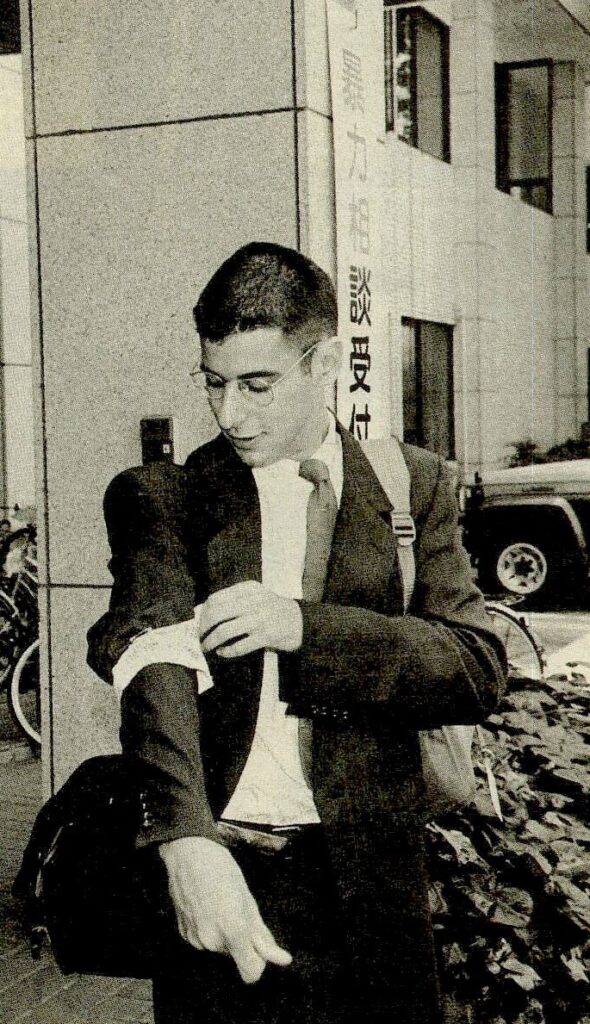
    Jake Adelstein, the foreigner, was the first from his country to ever work at the prestigious Japanese newspaper Yomiuri Shinbun. Having worked in Japan as an investigative journalist since 1993, he had become acquainted with many underworld personalities, including both retired and active gangsters. In this bar, one of them was telling Jake that he was crossing a dangerous line. Once over that line, even if he returned home the Yakuza would still come for him – he is originally from Missouri, USA. 

    Photo by Jake Adelstein, from ‘Life at 17 in 1986’ (Medium)

    Back then, Jake stepped away from the book he was writing about the Japanese mafia. He didn’t want to end up like a friend and fellow journalist whose son had been stabbed by mobsters. Afterwards, they sent him this message: ‘Don’t worry, we won’t consider killing you or any of your relatives for another five years.’ The Yakuza certainly know how to be persuasive. But Jake kept investigating the mob, for when he decided to actually publish the book, he had all the information he needed to strike hard.

    His main subject, Tadamasa Goto, was the leader of Goto-gumi, a mafia branch that owned more than a hundred front companies in Japan. He was even the largest shareholder of Japan Airlines at some point. In 2001, Goto mysteriously managed to skip the line for a liver transplant in a hospital in California. That’s when Jake became particularly interested in him.

    Yakuza’s message to Jake was reinforced in 2008. A deeply connected source told Jake that he was close to being killed. He was on Goto’s blacklist and no one had ever escaped it alive. He was advised to drop his investigation altogether or, if he had the courage, to publish something quickly.

    “What’s he going to do? Threaten to kill me? He’s already done that before”, said Jake.

    “He won’t threaten you. He’ll just do it. He’ll make it look like a suicide. How do you think Juzo Itami died?” the source replied.

    The source then told Jake that, back in 1997, when journalists approached Itami about the affair, the director laughed and said that his wife already knew all about it. And that Itami was planning to make a film about Goto’s mob and its relationship with a powerful religious group called Sokka Gakai, which had connections with big time politicians. This film would have been far more damaging than Minbo, as it would have exposed high-level corruption and money laundering, rather than merely depicting ‘mob tactics’.

    “Five men made him jump off his roof at gunpoint, that is how Itami committed suicide”, concluded the source.

    Following the advice he’s been given, Jake finally began his attack spree on the Yakuza in 2008. In that year, The Washington Post published, after a meticulous fact-checking process, his piece on Goto skipping lines in the UCLA Medical Center for the liver transplant. It also stated that Goto and his affiliates donated over 100 thousand dollars to the hospital, and that the FBI granted a “beyond generous” US Visa to Goto under the promise of collaborating with them on Yakuza investigations.

    Back in Japan, not a single local newspaper dared running the piece. “We publish this, and not only will we have to deal with Goto’s lawyers, we’ll have to spend a fortune on beefing up corporate security. Retaliation will be certain,” one senior editor at a media outlet told Adelstein.

    Jake followed this up by publishing his book Tokyo Vice in 2009. A Japanese translation was completed almost immediately, but, as with the article, nobody in Japan dared to publish it. It was only when the book was adapted for a major HBO series more than a decade later that a large scale edition was finally issued in Japan.

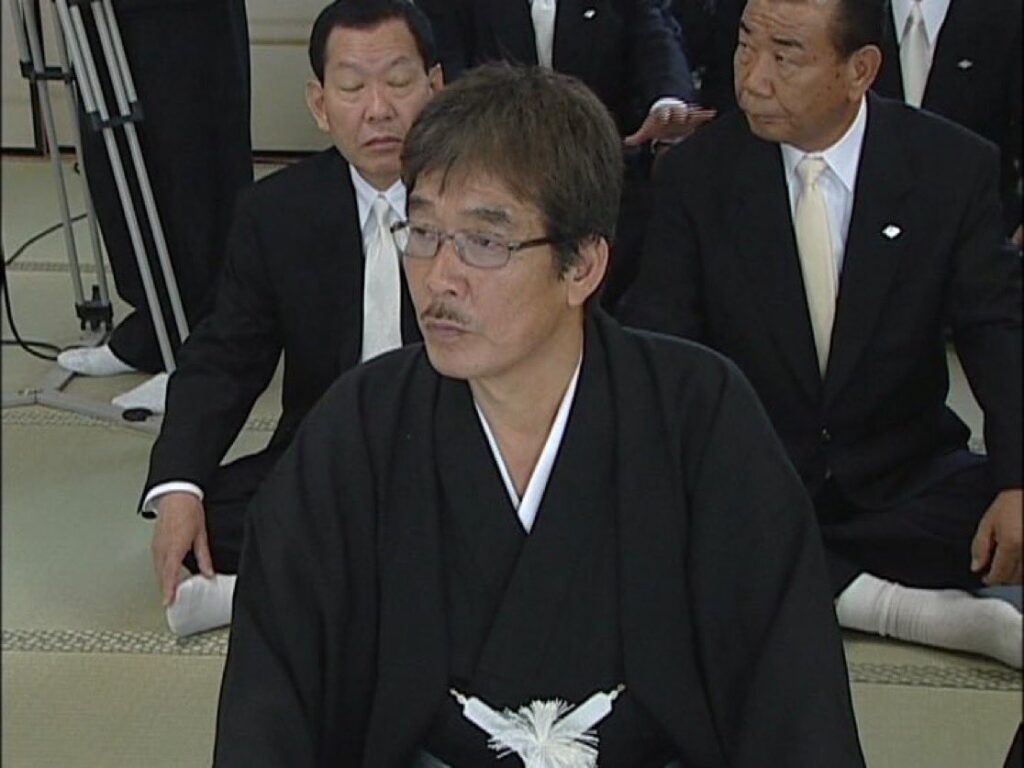
    The Yakuza hate being in the spotlight. And they probably didn’t like knowing that one of their leaders was in bed with the FBI either. So after the Washington Post article, Goto gradually lost influence within the mob. Had his name not become internationally known, perhaps the Yakuza would have taken a more “permanent form of retaliation” against him. But Goto lived; and became a Buddhist priest by the name of Chūei, which can be translated as “loyal and devoted”.

    Tadamasa Goto as a priest in the late 2000s.

    As for Jake, with Goto gone, the price on his head slowly began to plummet. He now lives a less troubled life with his family between the US and Japan; even though he still has problems sleeping.

    Unfortunately, Juzo Itami’s fears did not remain a thing only of imagination like Jake’s.

    Never-ending roundabouts

    After witnessing a brutal crime, a woman is forced to flee town as a step of a witness protection program. A middle-aged woman witnesses a brutal crime and is forced to leave her hometown under a witness protection program. She soon realizes that her new home is not as safe as it is supposed to be. From a mere witness she needs to turn into a resourceful survivor, because gunmen are closing in. This is the plot of Woman in Witness Protection, Itami’s final film, released only two months before his death. It resonates deeply with Jake’s source account about Itami planning a new movie.Did his last film offer a glimpse into the story he wanted to tell next? Did Itami see himself as a witness to a conspiracy of national proportions? One that came attached with… deadly consequences?

    Jake’s groundbreaking investigation on the Japanese mafia shows us that it is a real possibility that Itami was murdered. It is a solid possibility. But what about the suicide note? It would be easy enough to forge, since it was typewritten and unsigned. Considering that Itami, like many writers of his generation, was devoted to his traditional Genko Yoshi-type notebook, it is strange that no handwritten drafts or scribbles were found in his home. Only a single, coldly typewritten final note.

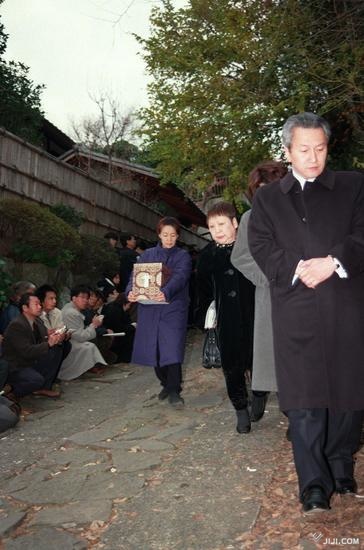
    Maybe Itami, for some reason, really chose the typewriter. Maybe as a way to make his last words as mechanic as possible, so to distance them as far as he could from the craft he spent a life in love with. But a writer can’t help but to leave a piece of their heart into the words they write, no matter how cryptic they are. The most alarming part was that it just didn’t sound like him. Friends and relatives just couldn’t picture a man like Itami taking his life because of a magazine scandal like that; and writing a note of that sort. That included his wife Nobuko. To her, Itami’s death was a brutal, unexpected shock. Days later, she carried her husband’s ashes at his funeral.

    Nobuko Miyamoto, the wife of director Juzo Itami, returns to their villa holding his ashes to her chest — Yugawara Town, Kanagawa Prefecture (December 22, 1997) [Jiji Press]

    Even knowing all of this now, it is impossible to know for sure. Jake’s source may have been misleading him on purpose, just to frighten him. Was Itami’s movie The Last Dance about the cheating director that considers suicide an inspiration for the Yakuza to fake a convincing setup, or an honest glimpse into Itami’s mental state and subconscious concerns, acting almost as a wish for a good outcome for the storms he knew were ahead?

    Maybe he did commit suicide.

    But it is important to admit that maybe he did not.

    Since no official investigation was ever reopened, the ending to Itami’s story will perhaps remain open to interpretation forever. But maybe there is still another version to this ending. A final act not borrowed from thrillers full of bad guys and dark alleys, but one that can convey his whole life without loose ends. One that leaves out all the frustrating tragedy of never-ending roundabouts and, instead, offers a plausible solution to Juzo Itami’s story.

    Persimmon Leaves

    Itami grew up in Matsuyama, a city in the Japanese province of Nagano, known for its clear water streams and warm-colored fruits. It was there that Itami started to fall in love with words. For Matsuyama is also the city of poets. The capital and birthplace of Haiku poetry; more than that, the city has been, forever, it seems, a magnet for all kinds of writers. For a while, he attended the prestigious Matsuyama Higashi High School, where he found himself immersed in literature. Between classes he met his future brother-in-law, Kenzaburō Ōe, who went on to win the Nobel Prize for Literature. There Itami preferred to spend his time reading French poetry, especially that of Arthur Rimbaud, rather than paying attention in class. 

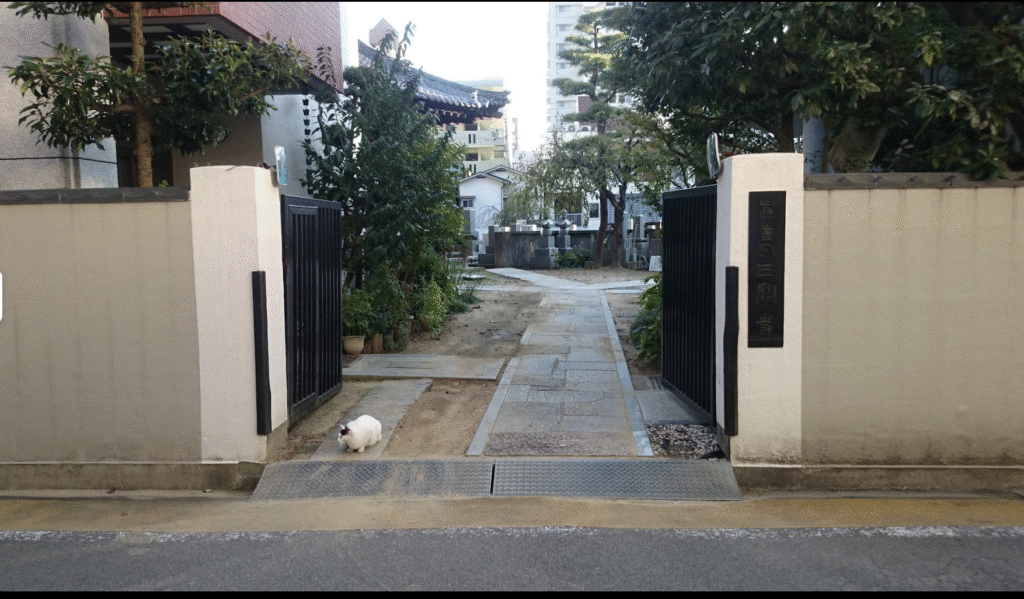
    In a thirteen minutes walk from the school, you will find, inside of a hidden Temple, a standing stone of many shades of grey. The stone is a monument for a poet called Nomura Shurindo, a pioneer of free-form Haiku, who attended that same school about 40 years before Itami.

    Sanpo Temple’s entrance, 3 Chome-7-7 Okaido, Matsuyama, Ehime 790-0802, Japan.
    Monument for the poet Nomura Shurindo.

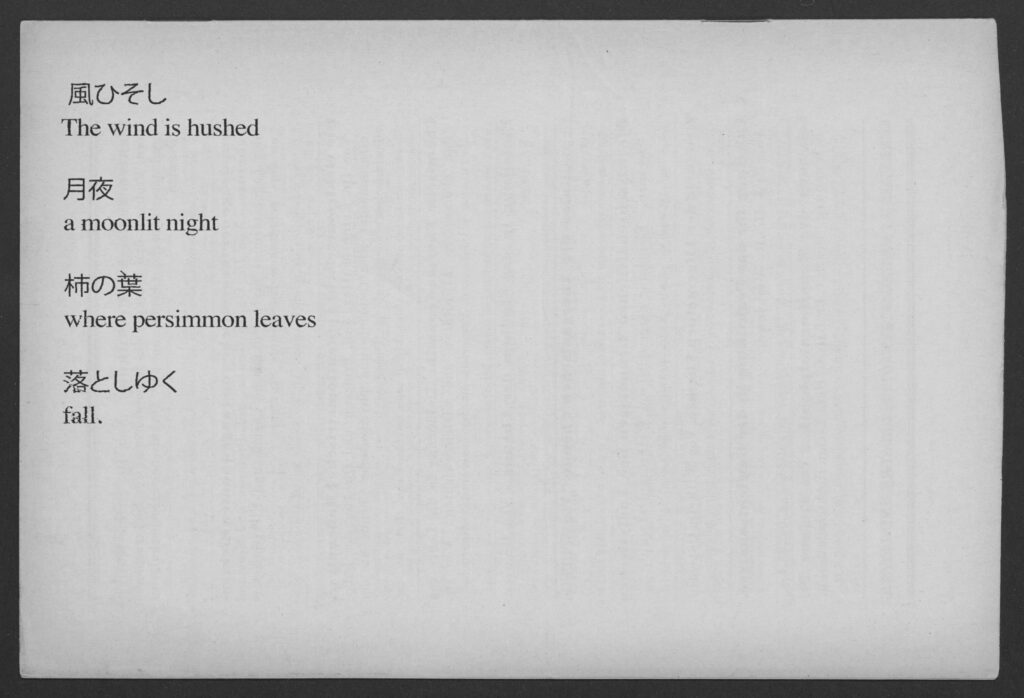
    Carved in that very stone is one of his poems. It reads:

    風ひそし 柿の葉落としゆく月夜 (Kaze hisoshi kaki no ha otoshiyuku tsukiyo).
    “The wind is hushed
    a moonlit night where persimmon leaves fall.”

    Every traditional Haiku contains a part that indicates a season; it is called kigo. This binds the poem to a specific time in nature. In this one, that part is “persimmon leaves”. Persimmon is a typical Kaki tree from the region. This poem is therefore set in Autumn, when the leaves of this tree turn a vivid orange, which happens around October; from November until the beginnings of December, the leaves slowly but surely begin falling. Maybe on December 20th, 1997, when Itami died, there were still a few fighting leaves lingering among the persimmon branches of Matsuyama. But they couldn’t help but eventually fall and wither away. But in Shurindo’s poem, these leaves will remain forever mid-air.

    A Haiku captures moments, emotions and sensations which single words like warm and cold, happy and sad, are not enough to describe. Like choosing to paint instead of taking a picture, they are not meant to tell complete stories by themselves, they are very short and their meaning is somewhat blurry, so you can fill in the gaps with your own imagination: like bite-sized impressionist paintings. I like to think that this one, the one carved in this stone of many grey shades, on the grounds of this small, very easy to miss temple in the city of Matsuyama, tells nothing but the story of Jūzo Itami. If he never crossed paths with this poem, I do believe that he watched, at least once, the orange leaves fall from kaki trees; and maybe wondered what words they were made of.


    Main Sources & Further Exploration

    “Juzo Itami.” Encyclopedia.com.

    “Erase it, or be erased”: Life on a Japanese mafia hit list, by Madeline Earp. Committee to Protect Journalists, February 24, 2010.

    “The Martyr of Japanese Cinema: Juzo Itami.” The Centipede.

    Nomura Shurindō Haiku Monument (“Kaze hisohiso kaki no ha otoshiyuku tsukiyo”). Google Maps.

    “Tampopo: Ramen for the People.” The Criterion Collection, August 3, 2016.

    “The Funeral: At a Loss.” The Criterion Collection, November 22, 2022.

    Related Books

    Tokyo Vice: An American Reporter on the Police Beat in Japan (2009), by Jake Adelstein. Pantheon. Buy on Bookshop.org*

    A Personal Matter (1964), by Kenzaburō Ōe. Translated by John Nathan. Grove Press. Buy on Bookshop.org*

    Writing Haiku: A Beginner’s Guide to Composing Japanese Poetry, by Bruce Ross. Tuttle Publishing, 2017. Buy on Bookshop.org*

    *Bookshop.org does not sponsor us, but purchases from affiliated links support our work (at no additional cost to you). Also, every purchase on Bookshop.org financially supports independent bookstores instead of billion-dollar companies.  Learn more

  • Artificial presence, scent and image: the ghosts haunting Roland Barthes, “Buddhas” and big cats

    Wooden board creaking, door suddenly slamming, purple shadows, a funky smell, a metal aftertaste. How would you describe a haunted manor?

    A ghostly presence is fragmented, often something that tells you it is there, without actually showing up. Even the figurative form of a ghost is portrayed as something incomplete: a blurry, pale silhouette, or a decomposing corpse. Skeptics may say they are just an interaction of man-made things with naturally occurring phenomena: a leak in your basement due to a heavy storm forms a creepy, half-lit little pool and a disturbing dripping sound. Or, in other words, a ghost is born.

    But the dictionary (a believer) says:

    ghost | ɡōst |
    noun
    an apparition of a dead person which is believed to appear or become manifest to the living, typically as a nebulous image: the building is haunted by the ghost of a monk | [as modifier] : a ghost ship | the ghosts of past deeds figurative.

    A dead being manifested to the living typically as a nebulous image. What if this “nebulous image” is not of a dead person, but of something that was never alive to begin with and yet, somehow, we perceive it as a presence? These could be called “artificial ghosts”, and, opposing their “natural” (heck, “organic”?) counterparts, they are not a matter of believing or not.

    All this pretentious, half-baked terminology talk may sound dull, so for hypothetical purposes and some peace of mind, let’s go back to a haunted manor story. Once upon a time, in this manor dwelled two artificial ghosts: the first haunted not men, but tigers and lions; the second one, more traditionally, begins with death. Again, both of them are very much real.


    The first ghost: big cats love Calvin Klein’s Obsession for Men cologne

    Lions, tigers, leopards, and other big cats have a particular thing for Calvin Klein’s Obsession for Men cologne. Just a hint of the fragrance over a surface is enough to make these animals mysteriously intrigued by it for quite a while.

    In the wild, field biologists in Central America spray the cologne Obsession for Men on trees and rocks to draw jaguars into camera traps. In Nicaragua and Guatemala, this technique has allowed scientists to capture rare images of elusive predators, sometimes even encouraging the cats to rub, roll, and drool, as if under a trance. Others would look at a piece of stone with hungry eyes and raised backs.

    But why this specific fragrance? Researchers at the Bronx Zoo tested over 20 different perfumes to see which ones kept big cats most engaged. Obsession for Men won by far, holding a tiger’s attention for up to 11 minutes, compared to just seconds for other scents. The secret seems to lie in civetone, a musk-like compound used in the perfume. One theory is that civetone mimics pheromones found in the glands of the African civet, an animal sometimes hunted and preyed upon by large felines.

    If so, to big cat eyes, this mysterious yet somehow familiar prey either hides too well, runs too fast, or turns its flesh into tooth-wrecking pieces of wood and stone. Only one part of it is clear as day: its scent. Irresistible. And that is enough to manifest an animal that never was. An artificial medium so well crafted to these animals – even if unintentionally – that almost has a pulse.

    And so big cats remind us that unplaced presences are not by definition scary, their spookiness has more to do with the way a particular person experiences them. But they are always fascinating. That is one of their most ontological features: a ghost haunts (in the sense that dwells in a physical place), and sometimes it spooks, but most importantly, it lures – and not only humans.

    The second ghost: pictures

    The photograph is literally an emanation of the referent. From a real body, which was there, proceed radiations which ultimately touch me, who am here; the duration of the transmission is insignificant; the photograph of the missing being will touch me like the delayed rays of a star.”
    Barthes, Roland. 1981. Camera Lucida: Reflections on Photography. Translated by Richard Howard. New York: Hill and Wang.

    Barthes wrote his ideas about photography while suffering from grief. His mother had just died, that is when photographs became eerie. She was still there, in the living room, inside pieces of paper walled by elegant frames, but she was also dead. If he ended up later describing the presence of an image as “delayed rays of a star”, one can imagine that his first realization about it felt more like the chilling reach of a ghost.

    He imagined photography as a presence moving across time and space — a physical trace of someone that once stood before the lens, now transmitted to the present viewer like a phantom touch or a warm sunny day – depending on one’s disposition. Barthes’ ideas, serving like a bridge to another realm, shed light on another type of artificial ghost. One that holds a lot of power over us: the ghost of imagery, especially photographs.

    Why are they so artificial, if what we see is a recorded piece of our world and people? Because if the stone appears to be a delicious meal for the tiger, it does not mean that it once had a beating heart. In a way, the optic mechanism that makes photographs possible is just like the chemical component that lures tigers: an artificial process interacting with an ecosystem. Just as a tiger rolls ecstatically in the chemical aura of civetone, humans circle endlessly around our recorded likeness, mesmerized not by the object itself but by the haunting, unique qualities of imagery. And what sets recorded images apart from other experiences one might have (you can, after all be fooled by a familiar scent just like a tiger) is our ability to relate so deeply with these images, which feel like a part of us and the world we live in. Basically, it is self-awareness which fuels our images with a type of knowledge that surpasses even the most subtextual aspects of content and form.

    These technological or chemical signals bypass rational thought, evoking a primordial response: instinct and, in the case of humans, self-awareness.’

    There is no need to say that we are surrounded day and night by photos and videos. No need also to enter the saturated discourse about screens and social media either – please don’t think of Black Mirror when reading this. The point is that, maybe, you feel an unaccounted presence in your house right now. You may have a constant, disturbing feeling that you are never alone; and no matter how many times you check doorlocks and closets, this feeling just won’t go away. And if it is not news for you that hyper connectivity is the cause, it might help, from a psychological perspective, to transform this abstract concept into a being – a character, a story. Doing that, we turn intimate a subject that is often tackled in an impersonal way, full of abstractions and nominalizations: how image-based media transforms our sense of awareness and presence.

    There are, after all, benefits about believing in ghosts. Through their making we can grasp more vividly how media can become very much alive (or undead) in our lives.


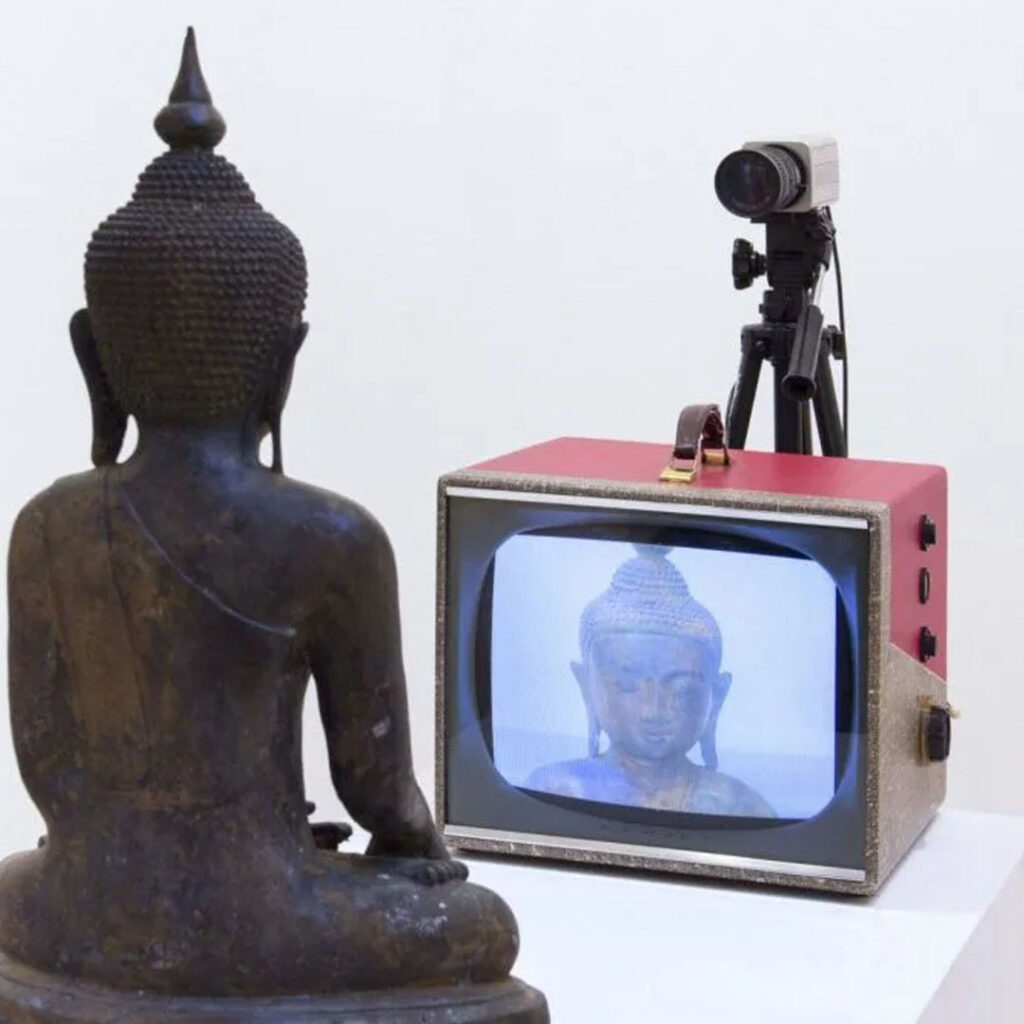
    TV Buddha by Nam June Paik (1974)

    A statue of the Buddha, a symbol of self-awareness and detachment, faces a live video feed of itself: an endless loop of self-reflection. The statue is drawn to its own image as if mesmerized by an invisible force. That is “TV Buddha”, an artwork by Korean artist Nam June Paik. Paik has done many works concerning the subject of screen feeds; and long before the word, “feed”, became an endless virtual space where millions spend most of their days.

    TV Buddha was first exhibited in New York City in 1974. The work has been reproduced in many places ever since, adding even more layers to its message.

    One of them is the Tate Modern, which displayed many other “television sculptures” by Paik in addition to TV Buddha. The museum also relies heavily on surveillance cameras to guarantee the “well-being” of its displays and archives. I wonder, what the staff of Tate’s multimillion-dollar surveillance operation thought while they watched, day after day, a statue of Buddha watching, day after day, a live feed of itself. Do they ever relate with it? And if a CCTV feed ever jitters a bit due to bad connection or a little cleansing rub, do Tate’s artworks ever feel alive in the eyes of their subcontracted guardians?

    Paik, Nam June. “TV Buddha” (1974).


    Security cameras are a great way to tackle this subject without mentioning social media and smartphones (because if it was social media that aggravated these presences, they did not create them).

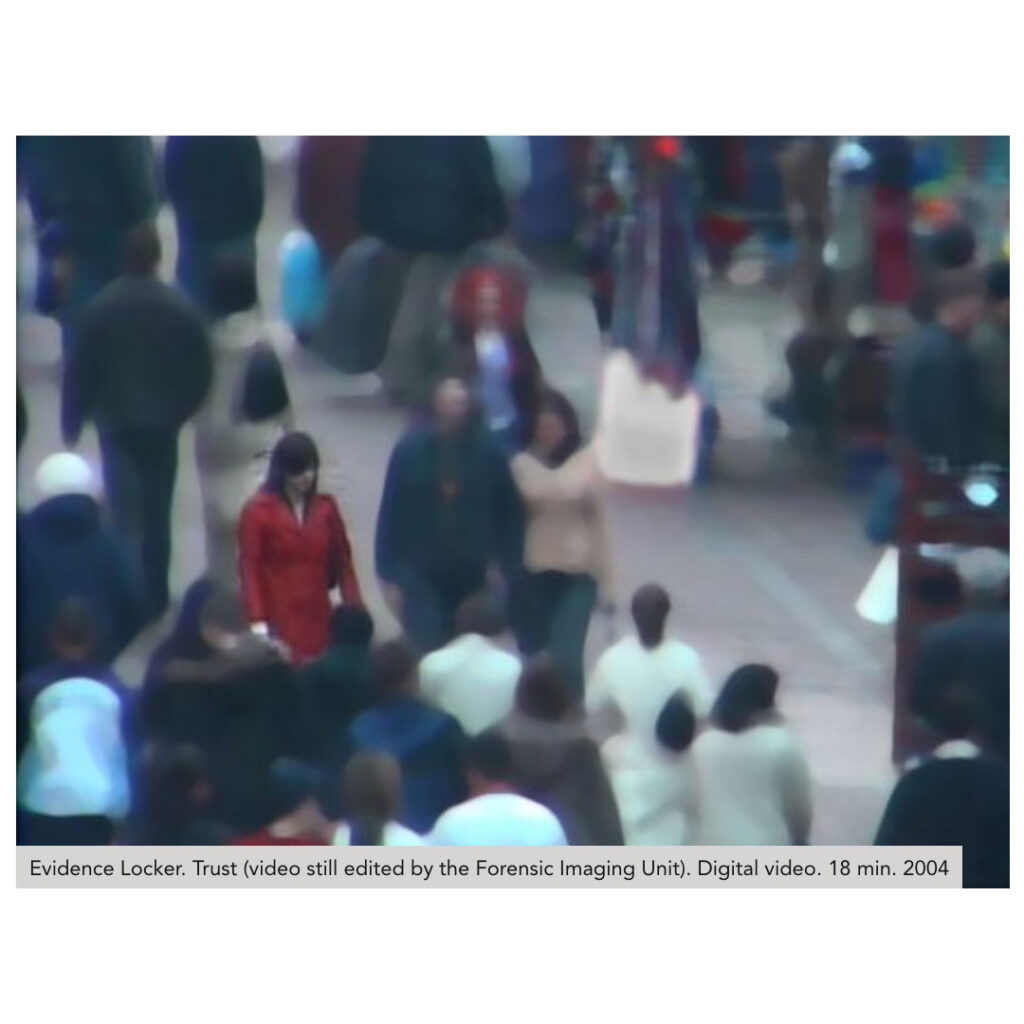
    Evidence Locker (Jill Magid, 2004)

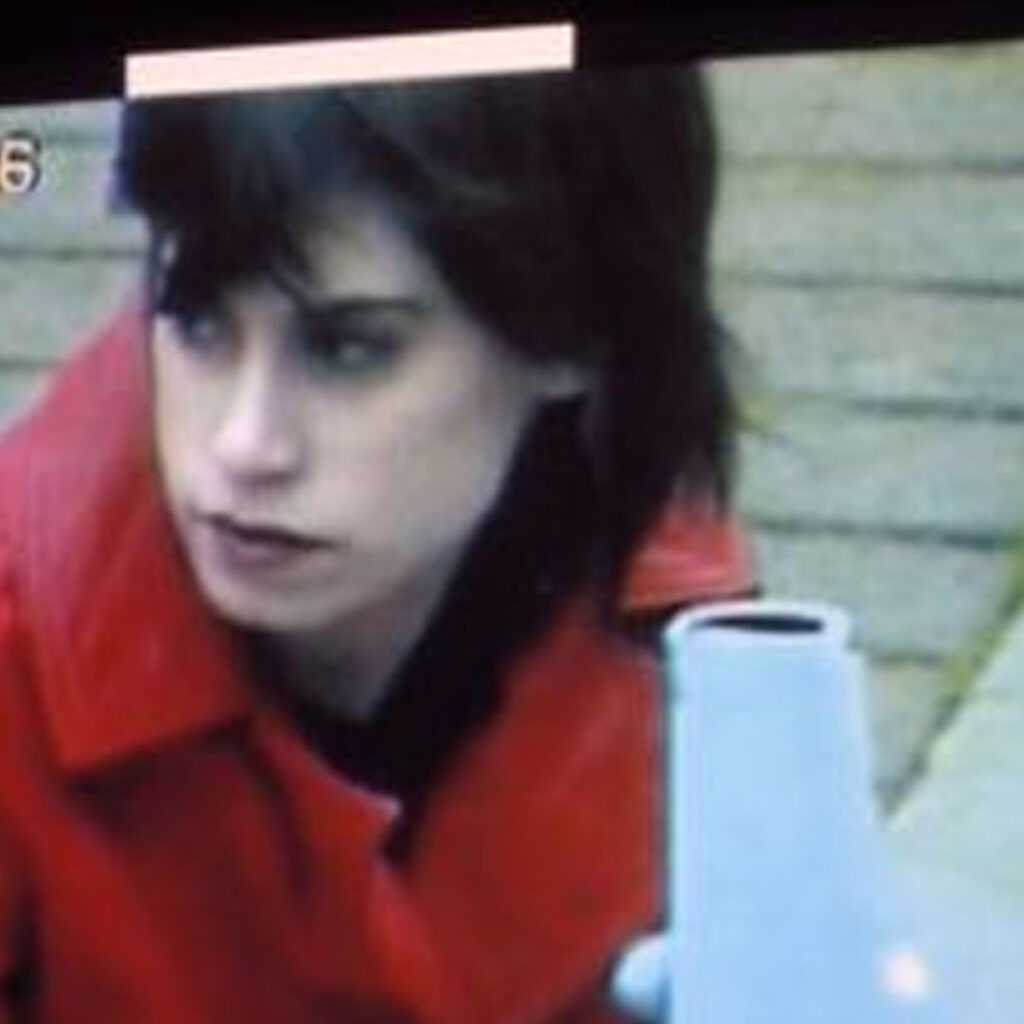
    In Evidence Locker (2004), artist Jill Magid spent 31 days in Liverpool engaging with the city’s vast CCTV network operated by Citywatch. Wearing a red trench coat, she staged performances in public spaces and directed police to film her using surveillance cameras.

    Unless requested as evidence, CCTV footage obtained from the system is stored for 31 days before being erased. Magid submitted 31 Subject Access Request Forms—legal documents detailing the time and nature of each ‘incident.’ She wrote them as intimate letters to a lover, sharing her thoughts and feelings. These letters became One Cycle of Memory in the City of L, a poetic diary capturing her relationship with surveillance, imagery and the city.

    Magid, Jill. “Evidence Locker.” (2004).

    Unlike Magid, the Buddha hasn’t requested yet CCTV footage from Tate’s security to write poems about it. Magid faced security cameras essentially for herself. The Buddha is there strictly for us, it wouldn’t be there if it wasn’t first an image in his creator’s head, which probably came to him from the combination of other images he had registered in his brain before, like of Buddhist temples in Korea, of vitrines showcasing lastest-generation televisions, cyberworlds from science fiction novels or media theory books, like Mcluhan’s Understanding Media: The Extensions of Man, whose groundbreaking ideas about how media systems shape how we think and perceive the world are contemporary to Paik’s sculptures. “The medium is the message” is somewhat an eerie proposition by itself; if Mcluhan compared media to extra human limbs, they sometimes do feel more like whole, independent living beings.

    If an observer stands behind the Buddha, they will also see themselves in its screen. Many people, when realizing this interactive aspect of the piece, can’t help but to draw out their phones and make a recording of a recording. And, as the two cameras collide – Buddha’s and the Observer’s – they may form an infinite loop of images. This new imagistic space will resemble a room inside a room inside a room and so on, forever. One can’t help but to fail miserably trying to picture how many ghosts live inside this one loop. But it’s safe to say is this much: there are many more haunted rooms in our haunted manor than we first imagined.


    Main Sources and Further Exploration:

    “Do Big Cats Love Calvin Klein Cologne?” by National Geographic. YouTube, June 28, 2010.

    Evidence Locker, by Jill Magid, 2004.

    TV Buddha, by Nam June Paik, 1974.

    Pictures of Ghosts, directed by Kleber Mendonça Filho, 2023.

    “Camera Lucida,” by Sarah Charlesworth. Artforum.

    Related Books:

    Camera Lucida: Reflections on Photography, by Roland Barthes. Translated by Richard Howard. Hill and Wang, 2010. Buy on Bookshop.org*

    Understanding Media: The Extensions of Man, by Marshall McLuhan. Introduction by Lewis H. Lapham. MIT Press, 1994. Buy on Bookshop.org*

    “Time and J. W. Dunne,” by Jorge Luis Borges. In Other Inquisitions, 1937–1952. Translated by Ruth L. C. Simms. University of Texas Press, 1964. Buy on Bookshop.org*

    *Bookshop.org does not sponsor us, but purchases from affiliated links support our work (at no additional cost to you) Also, every purchase on Bookshop.org financially supports independent bookstores instead of billion-dollar companies.  Learn more

  • Can Lionel Messi distort time? The connection between dogs, neural simulation and football fandom

    In the piece “Messi es un perro”, Argentinian journalist and long-time Barcelona resident Hernán Casciari compares Lionel Messi to a dog. However, his goal is not to insult or ridicule the player. Casciari presents one of the most beautiful sports chronicles of this century. Written in 2012, this style of chronicle is a dying breed today: literary sports writing.

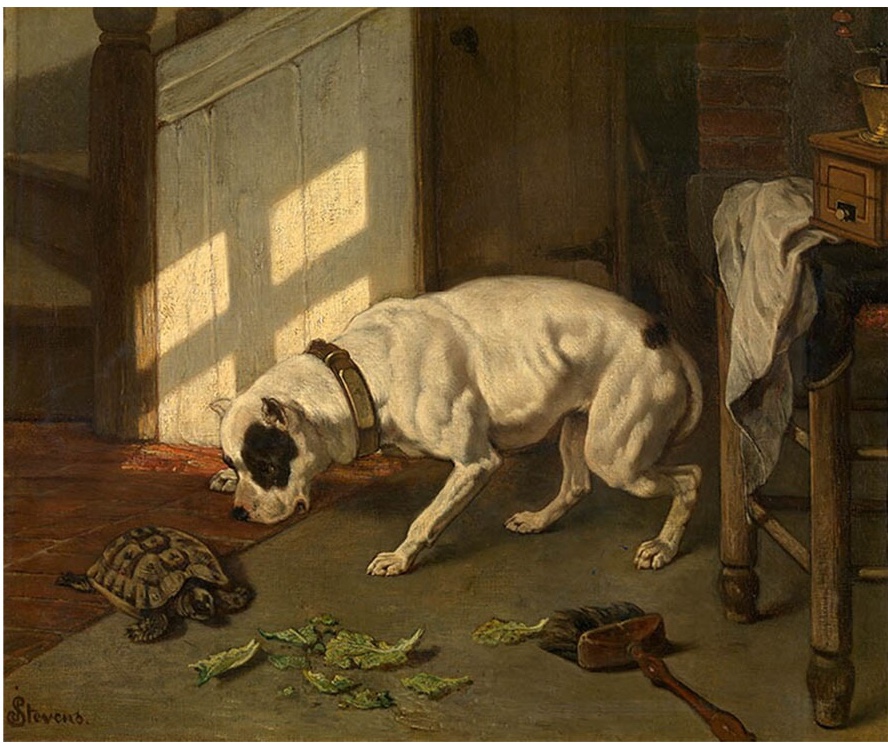
    Casciari suggests that Messi is driven by a simple, dog-like fascination with something. In Messi’s case, as with many dogs, it is to move a ball to a specific place without concern for the complexities of the human world. A dog sees something about “ball,” “bone,” or “stick,” not because they are a ball, a bone, or a stick, but because they are simply there. It’s an instinctive fascination, beyond meaning. For the dog, for a moment, that object is the center of the world. Dogs are willing to put themselves in danger just to get it. Maybe what comes closest to this experience for human beings is their devotion to God. Or the game of football.

    Imagine that a human being has the power to look at something like a dog does. Beyond language. It is a truly beautiful idea. A romantic and colorful literary work about modern football. We don’t get many of those anymore.

    A neurolinguistic twist in (sports) reality

    If literature says that Messi is not bound by language, some scientists say what could explain his superiority in football is exactly language. Not English or Spanish, but the language systems our human brain is coded with. From the field of neural science and computational simulation came the theory that Lionel Messi can slow down time. You read that right. Slow down time.

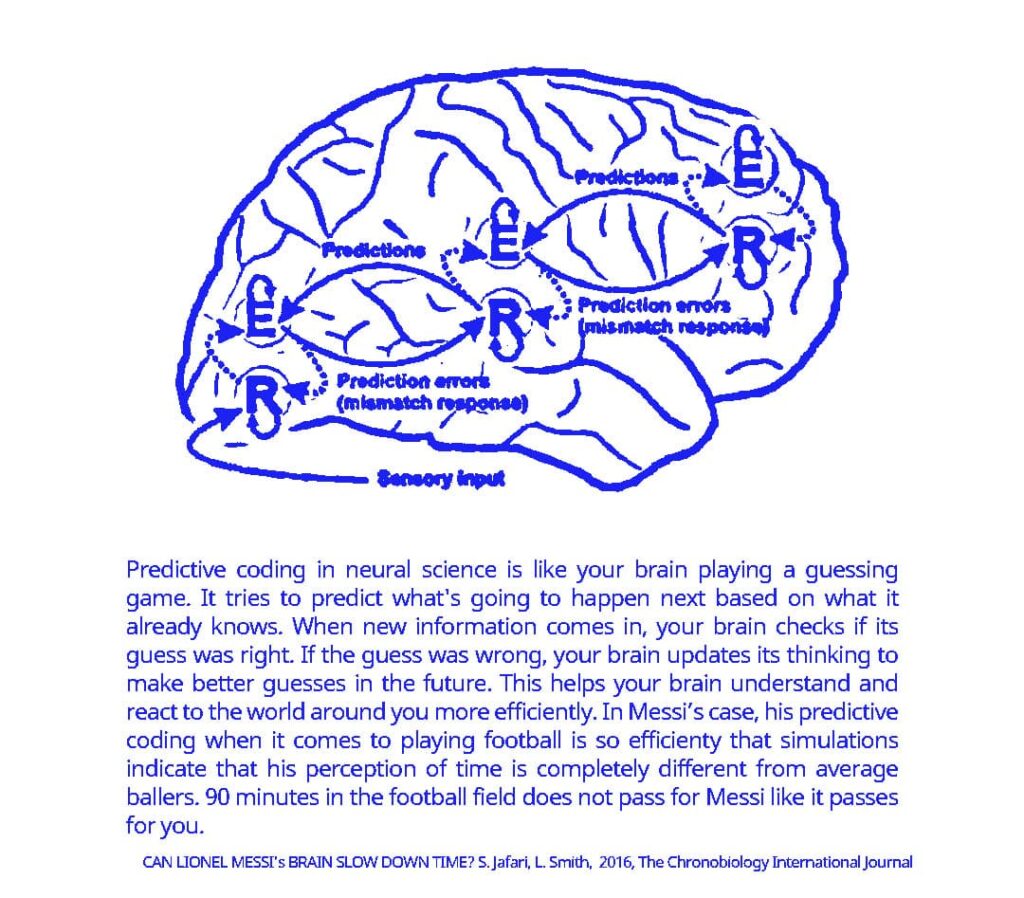
    Messi’s innate football talents hint at a distinct perception of time, possibly influencing his life on and off the field. Two scientific papers investigate this with solid neuroscience methodologies, examining neural dynamics and predictive coding.

    This hypothesis is examined in scientific papers, notably by Jafari & Smith (2016) and discussed in the context of Erren et al. (2016), through a lens of advanced neurocognitive processing and neural efficiency. The technical underpinnings involve differential equations modeling neuronal dynamics, the optimization of neural network structures for predictive coding, and the role of focused attention states in modulating time perception. These mechanisms suggest that through rigorous training and possibly genetic factors, elite athletes achieve a level of brain function optimization that allows them to process and respond to external stimuli with exceptional speed, giving the subjective experience of extended time during critical moments of performance.

    Predictive coding, essentially a biological semantic algorithm, anticipates future occurrences. While some might see it as just having quick reflexes, Messi’s ability to foresee gameplays indicates he has an extraordinary perception of the world, vastly different from the average individual.

    By YON – Jan C. Hardenbergh – Own work, CC BY-SA 4.0

    While some may dismiss things like footballing fanaticism, dog-men, and the slowing of time as being stupid and meaningless, it is in such mental spaces that language, whether through words, synapses, or code, often takes its most free, creative, and promising forms.

    The silly, beautiful thing that matters the most

    Language, the fuel of creation, can then blossom into scientific innovation, social ideas and most important of all: football, or other silly, beautiful things that warm your soul.